How AI Finds and Uses Tools on Its Own
Listen to this article
Before we get technical
Have you ever walked into a new restaurant where the server just hands you a menu and you figure out what to order on your own? Nobody needs to pre-select your meal or explain every dish — you read the descriptions, decide what sounds right, and place your order. That's surprisingly close to what's happening when AI discovers tools automatically. Instead of a developer manually connecting every single tool ahead of time, the AI gets handed a menu of options, reads what each one does, and picks the right one for the job. The question is — how does that actually work behind the scenes?
What you'll learn
- Understand what automatic tool discovery means
- Walk through a real example of an AI finding and using a tool via MCP
- Compare the developer effort needed for APIs versus MCP
- See how tool descriptions help AI decide which tool to call
Last chapter, we learned what MCP is and how MCP servers wrap tools in a standard format. Let's see the feature that makes MCP truly different: the AI can find tools all by itself.
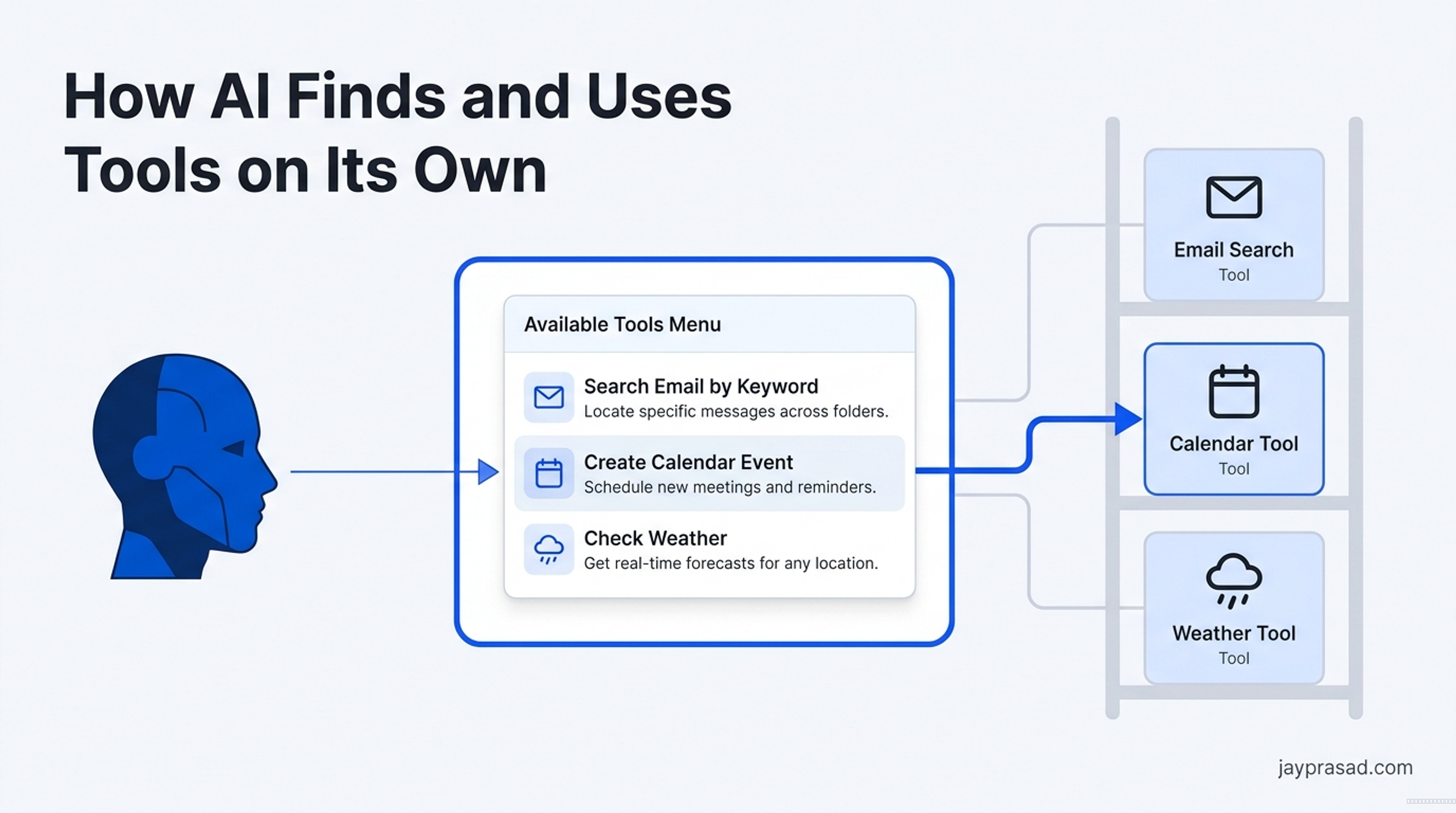
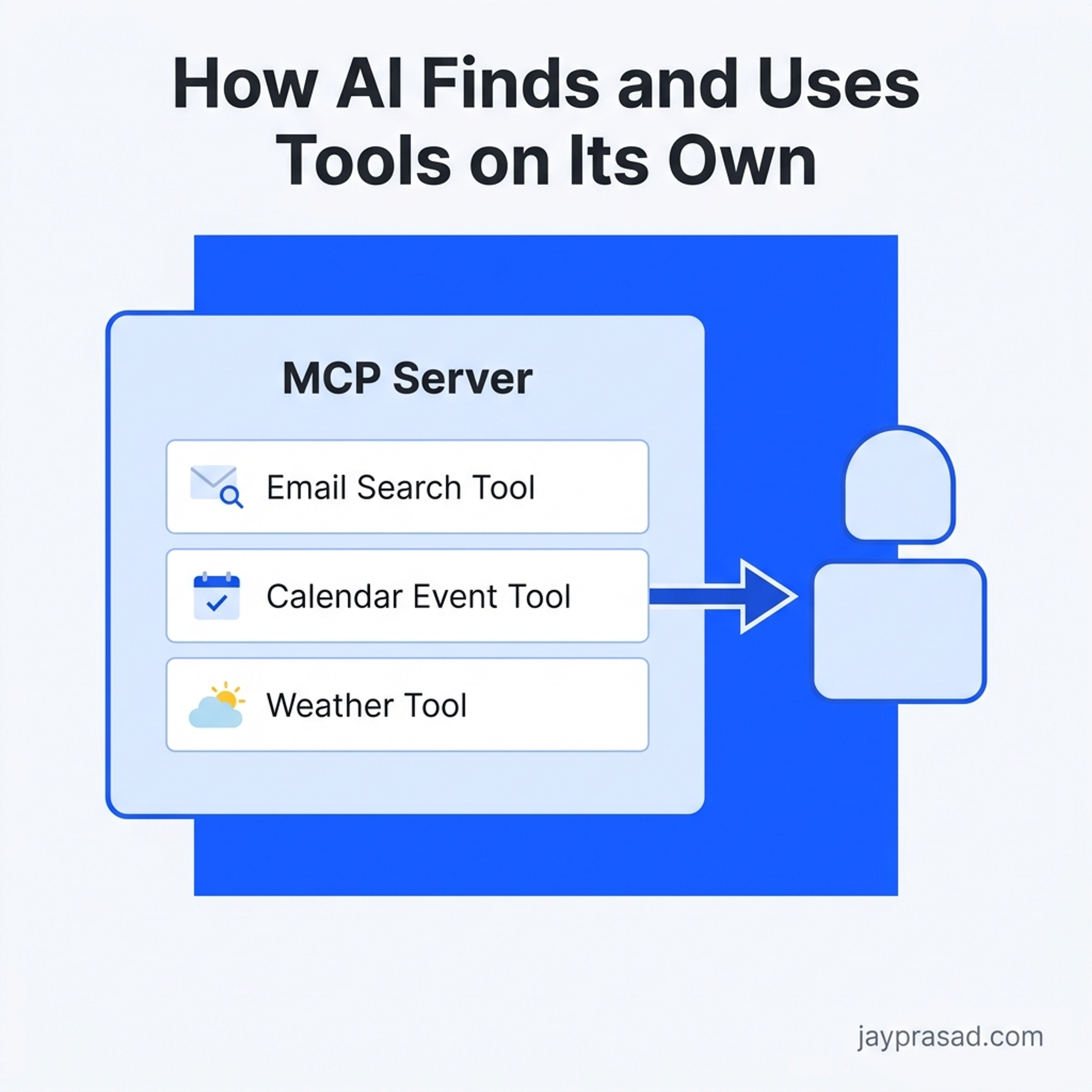
Think about walking into a restaurant you've never been to. You don't need someone to explain every dish from scratch. You sit down, open the menu, read the descriptions, and decide what to order. Tool discovery works the same way. When an AI connects to an MCP server, that server hands over a menu — not a menu of food, but a list of tools it offers. Each tool comes with a description written in plain language that the AI can read and understand. Something like "this tool searches your email by keyword" or "this tool creates a new calendar event with a title, date, and time." The AI reads those descriptions, understands what each tool does, and decides which one fits the task at hand. No developer had to write special instructions telling the AI about that specific tool. The AI figured it out from the menu.
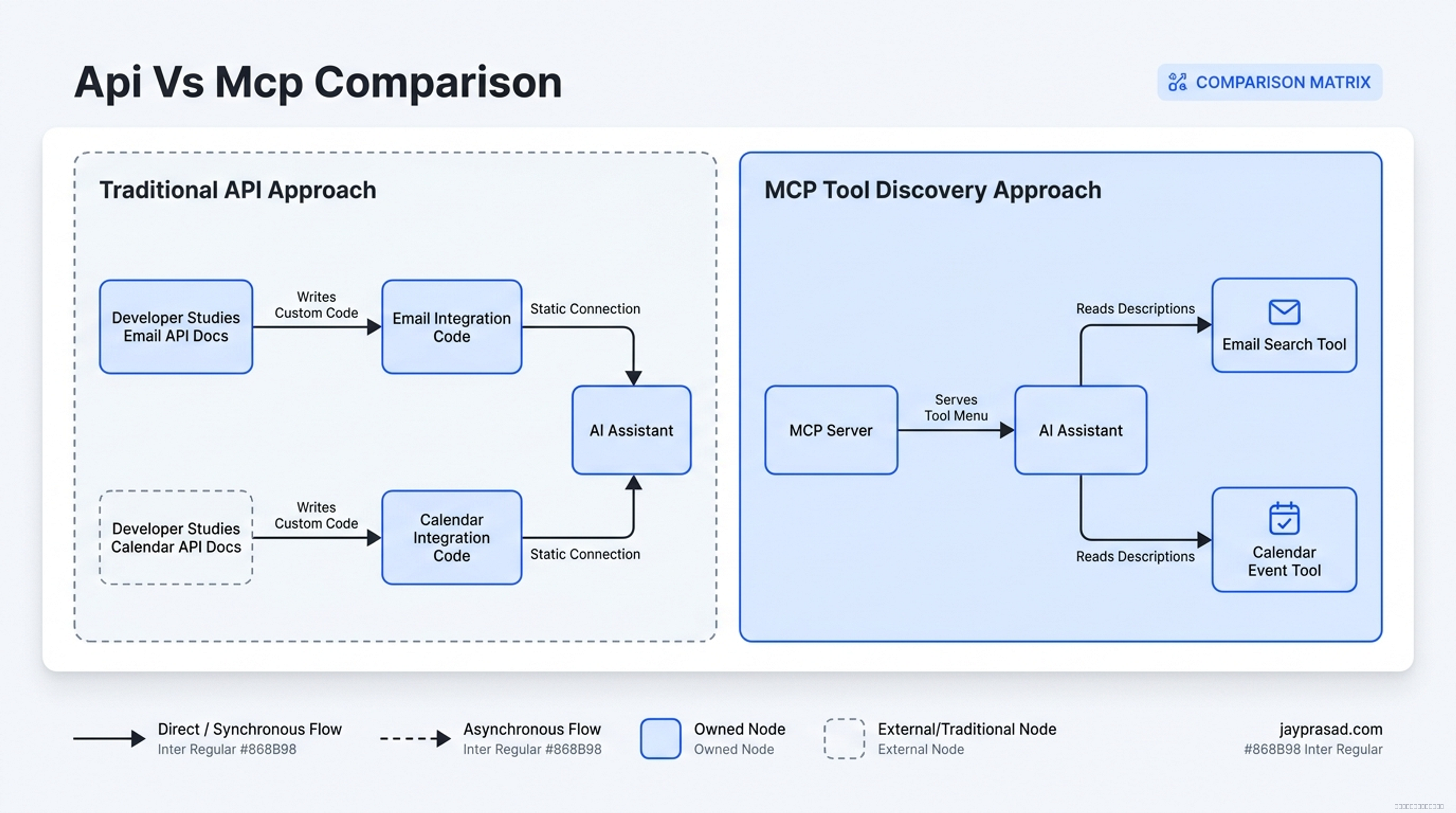
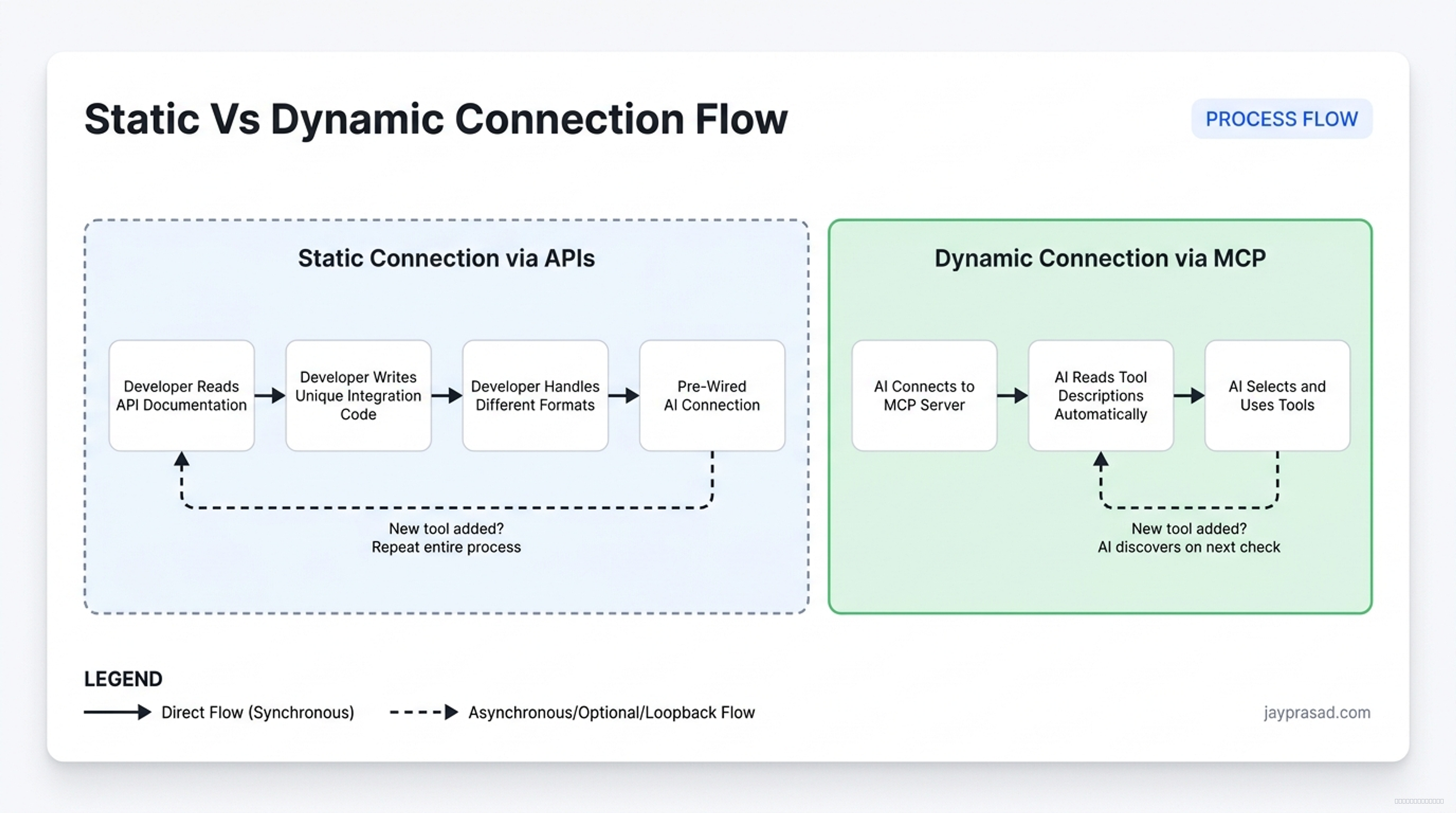
Here's why that matters. Remember how APIs work? We talked about APIs being like a waiter between your app and a service, where a developer writes custom code for every single connection. If you want your AI to send emails through one service and check the weather through another, a developer has to study both APIs separately, read their documentation, write unique integration code for each one, and handle their different formats. That's a static connection — it only works because a human carefully wired it up ahead of time. MCP flips this around with what's called a dynamic connection. Dynamic just means the connection can adapt and change on the fly. The AI doesn't need pre-written instructions for every tool. It connects to an MCP server, reads the tool descriptions automatically, and starts using them. Add a brand new tool to that server tomorrow, and the AI discovers it the next time it checks the menu. No code changes. No developer rewriting anything.
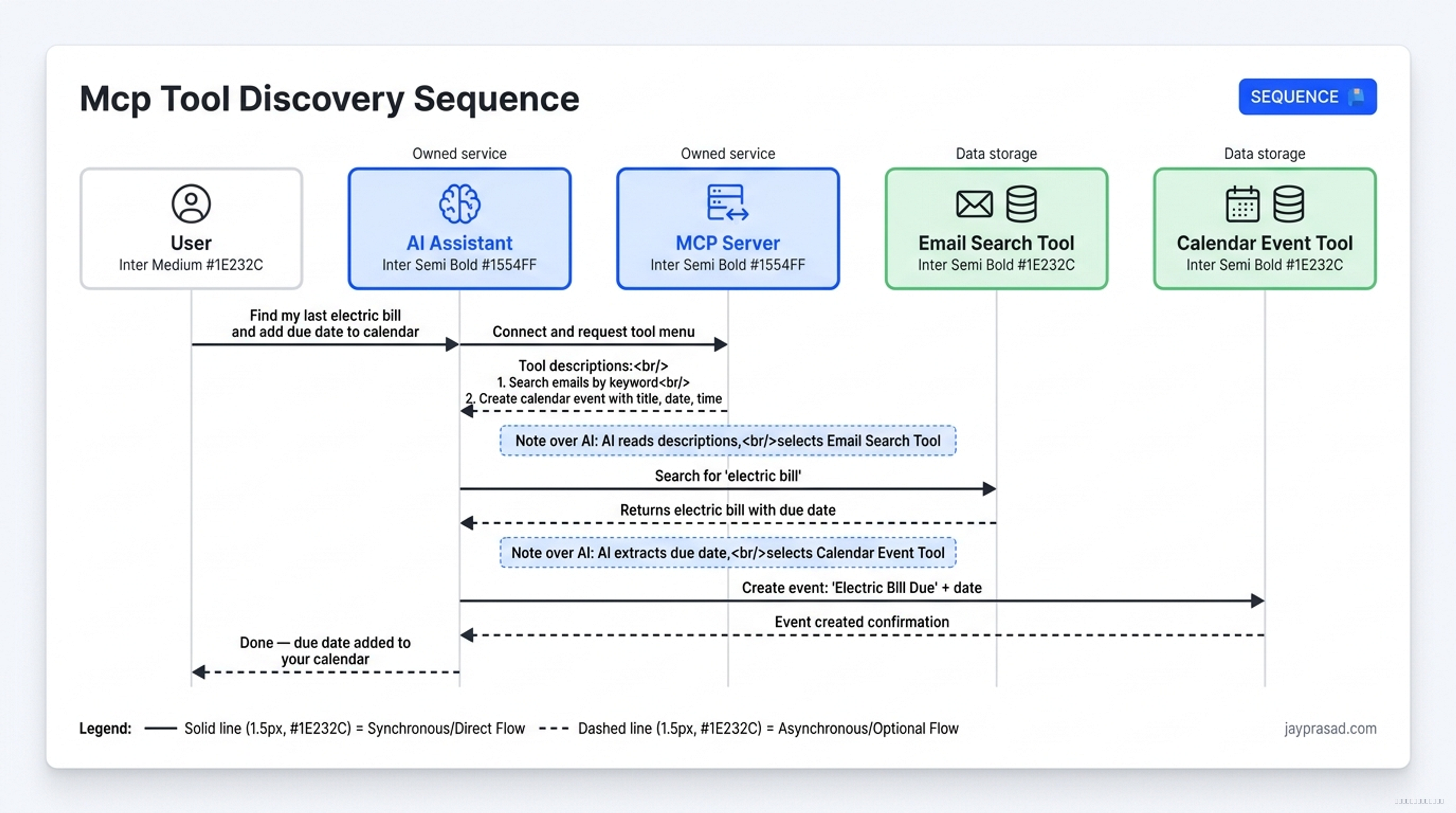
Let's walk through a real example. Say you ask your AI assistant to "find my last electric bill and add the due date to my calendar." With traditional APIs, a developer would need to build a connection to your email service, build a separate connection to your calendar app, and write logic telling the AI exactly how to use both. With MCP, the AI connects to a server that offers email search and calendar tools. It reads the descriptions. It sees one tool that searches emails by keyword and another that creates calendar events. It searches your email for "electric bill," pulls out the due date, and calls the calendar tool to add it. The AI chose those tools and figured out how to chain them together — all from reading the descriptions on the menu. The developer's job? Just make sure the MCP server is running. That's a massive reduction in effort.
This is what people mean by AI autonomy — the ability of an AI to make its own decisions about which tools to use and when. Remember way back in chapter one when we called AI a brain without hands? Tool discovery through MCP is like giving that brain the ability to walk into a workshop, look at all the tools hanging on the wall, read their labels, and pick up the right one for the job. With APIs, someone had to hand the brain each tool individually and explain exactly how to grip it.
MCP can do things APIs can't. But APIs aren't going anywhere. The real question is — when should you use which? And can you use both at the same time?
Coming up next
So MCP can do things APIs can't. But APIs aren't going anywhere. The real question is: when should you use which? And can you use both at the same time?