When to Use APIs, MCP, or Both
Listen to this article
Before we get technical
You've got two solid tools in your toolkit now — APIs and MCP. But knowing how a hammer and a screwdriver work doesn't automatically tell you which one to grab when you're standing in front of a wobbly shelf. That's the real skill: matching the right tool to the job. Sometimes APIs are the clear winner. Sometimes MCP makes everything smoother. And honestly? A lot of smart systems use both at the same time, each handling what it does best. The decision isn't as complicated as it might feel — you just need a few good questions to ask yourself. Here's your cheat sheet.
What you'll learn
- Apply a simple decision framework to pick the right approach
- Know when APIs are still the best option
- Know when MCP is the better fit
- Understand how APIs and MCP can work side by side in one system
- Walk away with a clear mental model for any future AI project
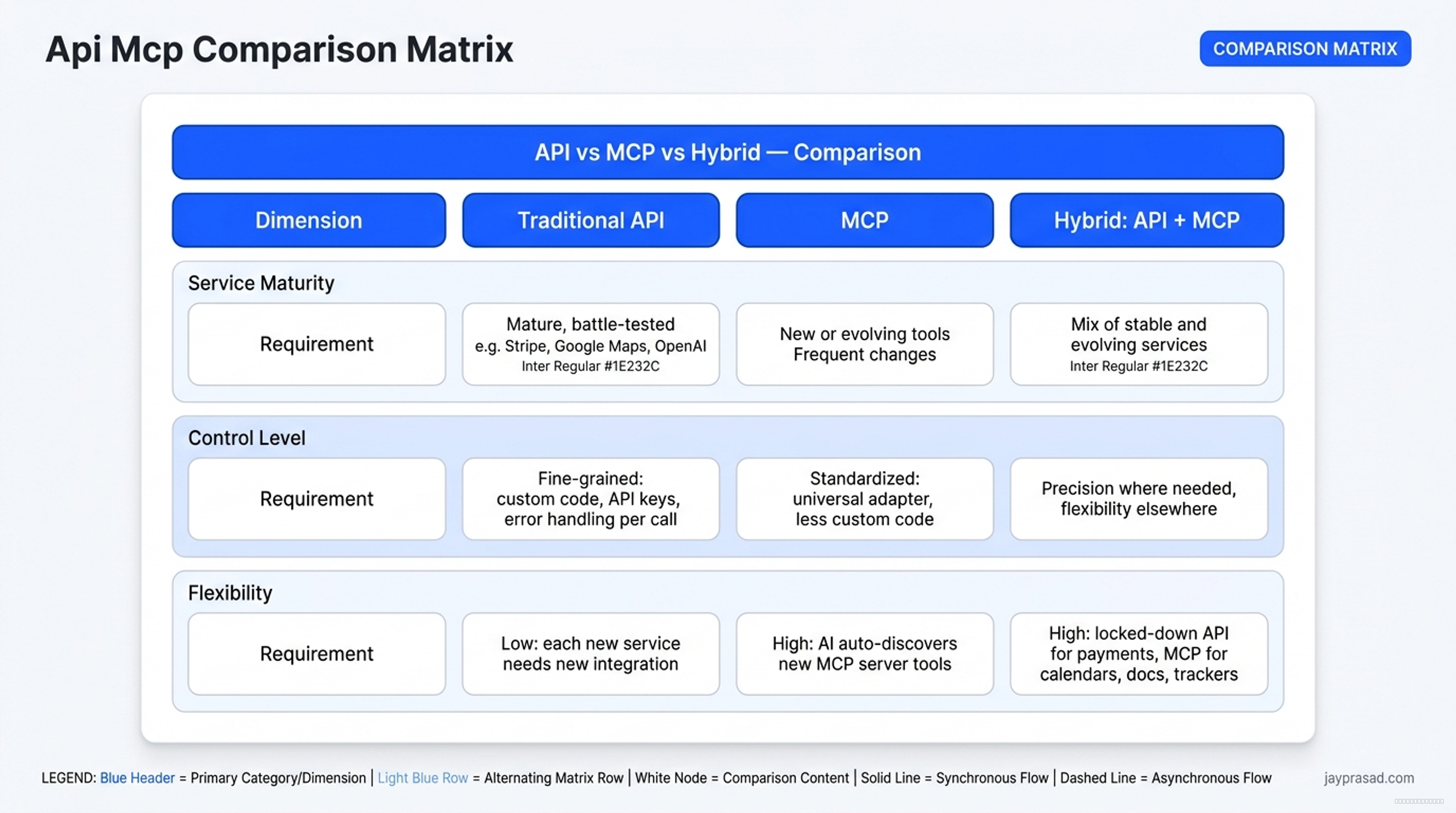
We've covered how APIs work, what MCP brings to the table, and how tool discovery changes the game. Let's put it all together and answer the big question: which one should you actually use? The answer, honestly, is "it depends" — but not in a vague, unhelpful way. There's a simple framework you can use every time you face this decision. It comes down to three things: maturity, control, and flexibility.
Start with maturity. How established is the service you're connecting to? Remember how we described an API as a waiter taking your order to the kitchen? Well, some restaurants have had that waiter working there for ten years. The menu's polished. The process is bulletproof. Services like Google Maps, Stripe for payments, or OpenAI's own API have mature, well-documented APIs that have been battle-tested for years. If the service you need already has a solid API with great documentation, just use it. Don't overthink it. That API will give you reliable results, predictable behavior, and a huge community of developers who've already solved the problems you're about to run into.
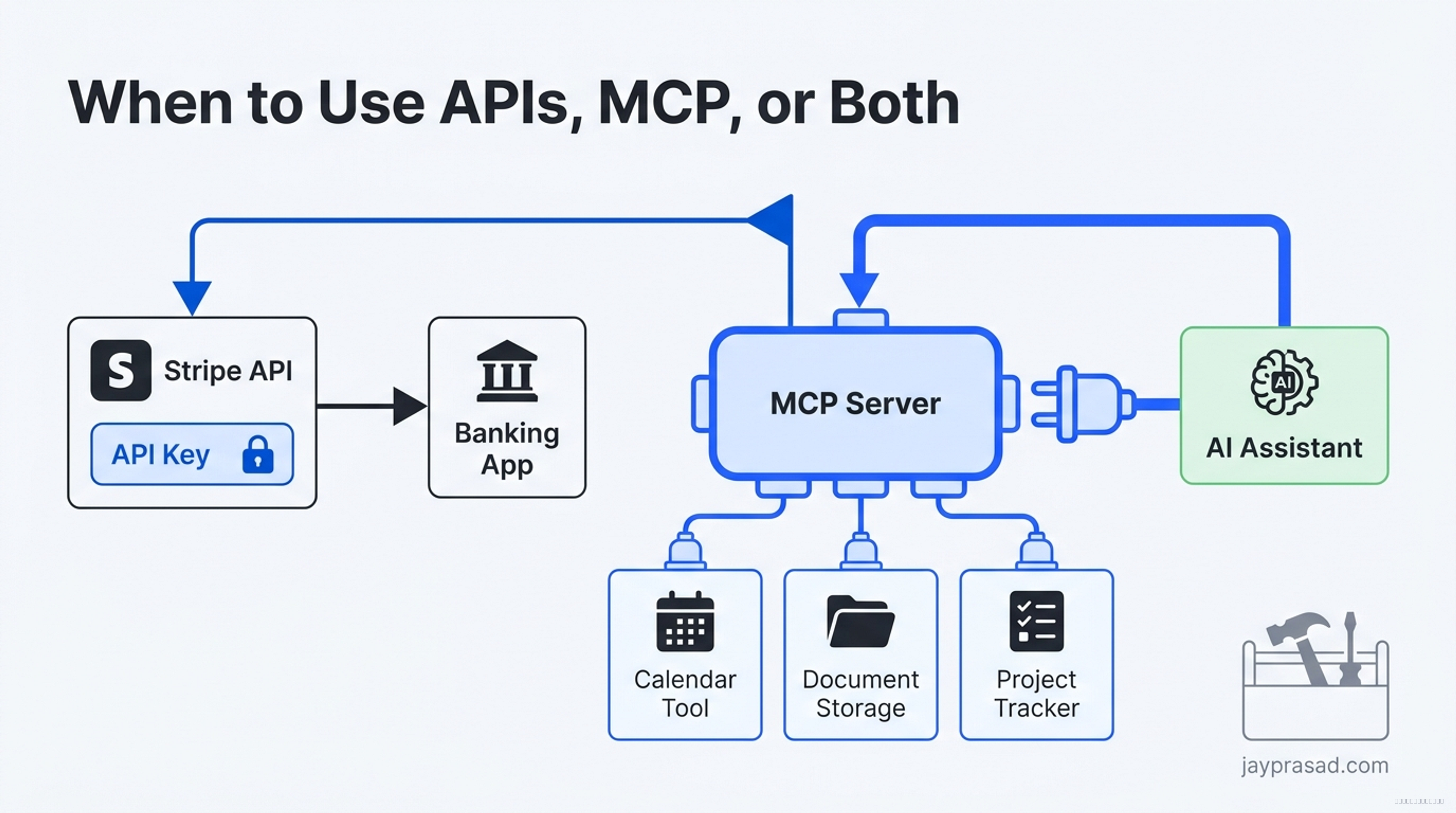
Think about control. How precisely do you need to manage what happens during every step of the connection? APIs give you fine-grained control — you write custom integration code, meaning you hand-craft exactly how your application talks to each service. You decide what data gets sent, what comes back, and how errors are handled. If you're building something where security is critical, like a banking app, or where every millisecond matters, that level of control is worth the extra development work.
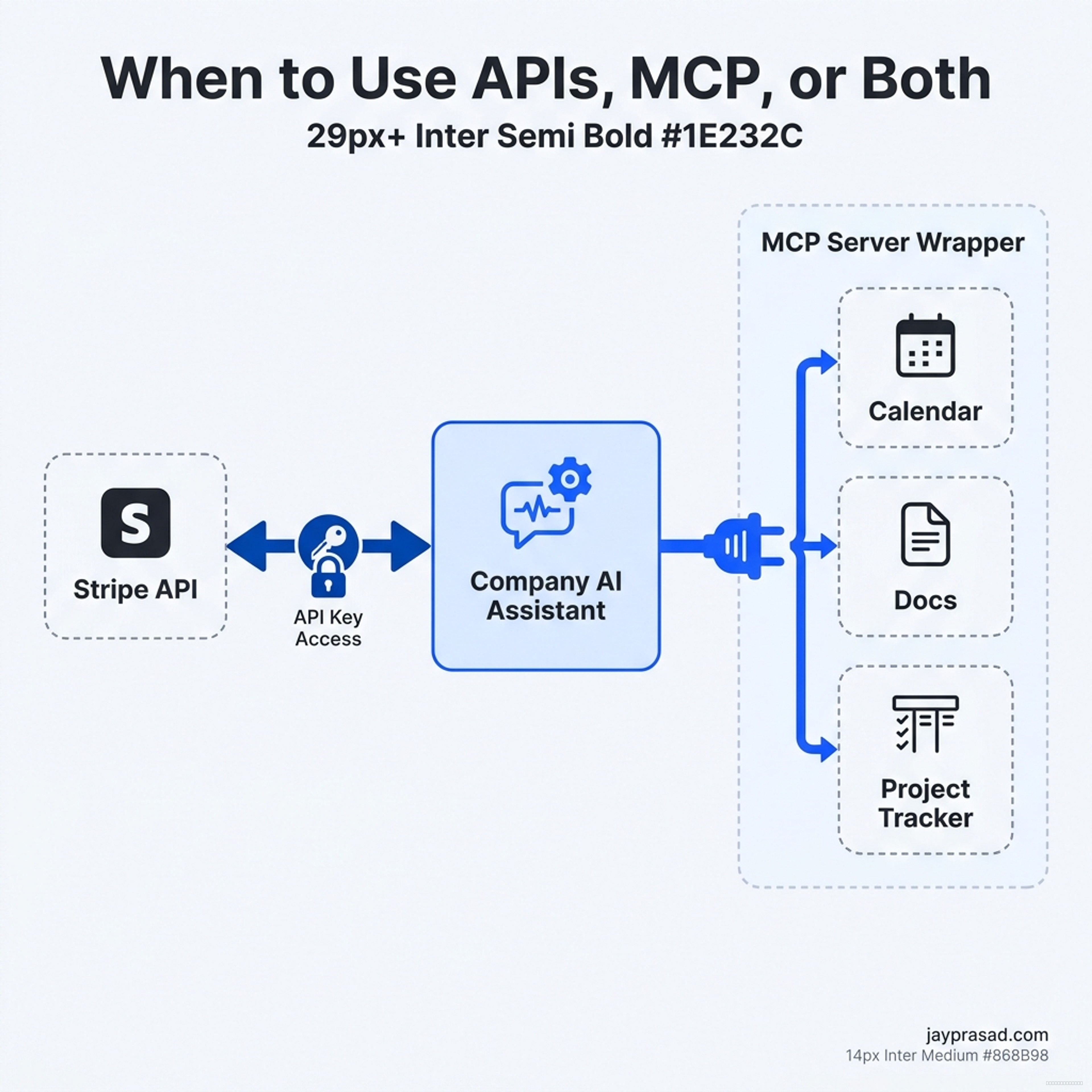
MCP, on the other hand, trades some of that precise control for flexibility. Remember how MCP works like a universal adapter, giving AI a standard way to connect to any tool through small wrappers called MCP servers? That standardization means your AI can discover and use new tools without you writing custom code for each one. If you're building a system where your AI needs to interact with lots of different tools, or where the tools might change over time, MCP saves you an enormous amount of effort.
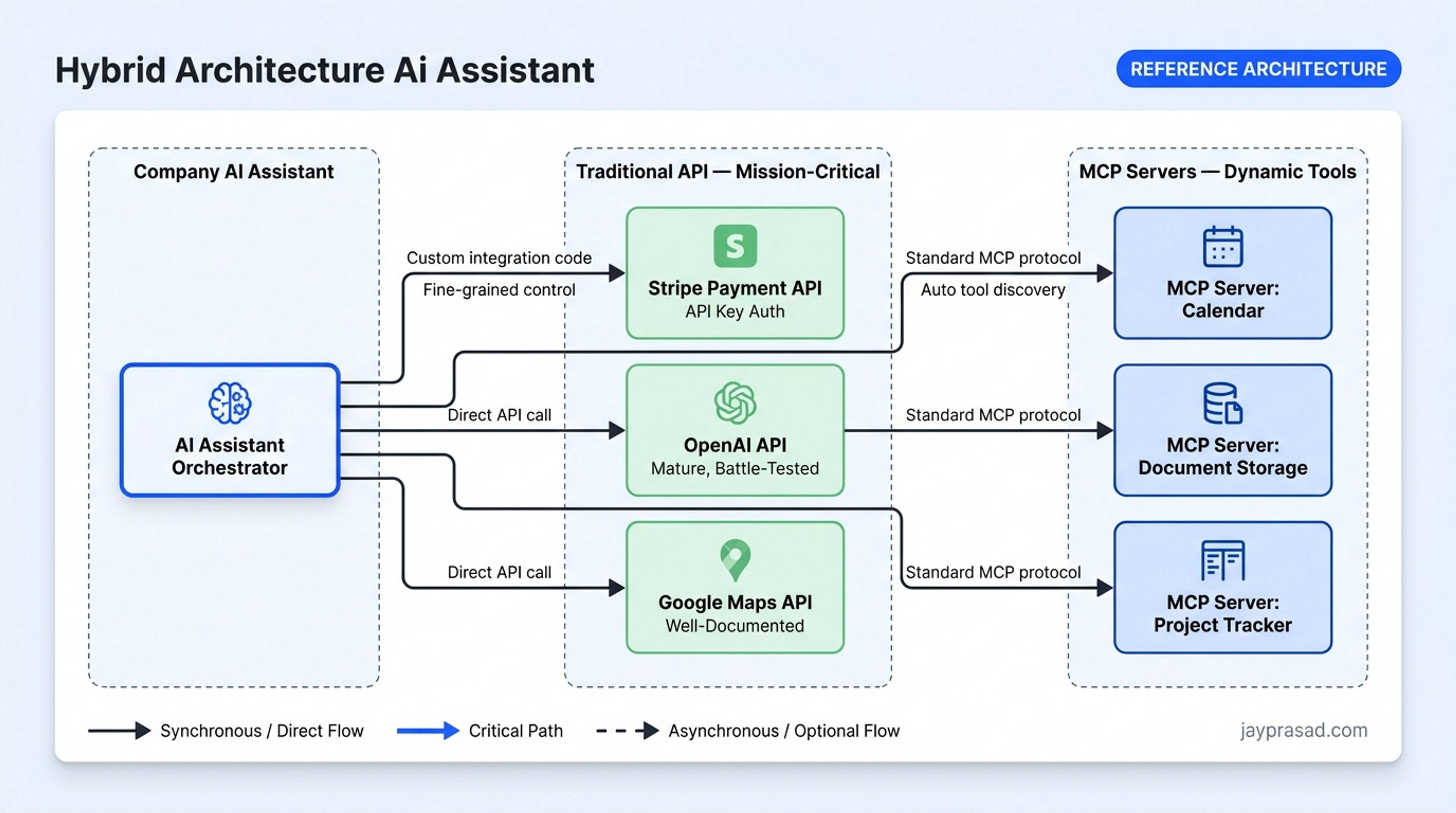
Here's what most people miss, though — you don't have to choose just one. Many real systems use both together. A hybrid approach. Picture an AI assistant for a company. It uses a traditional API to connect to the payment system because that connection needs to be locked down tight, with specific authentication using API keys — those secret passwords we talked about earlier. But that same assistant also connects through MCP to a dozen internal tools like calendars, document storage, and project trackers, because those tools change frequently and the AI needs to discover what's available on its own. The API handles the mission-critical, stable connections. MCP handles the dynamic, evolving ones. Each one matched to the job it does best.
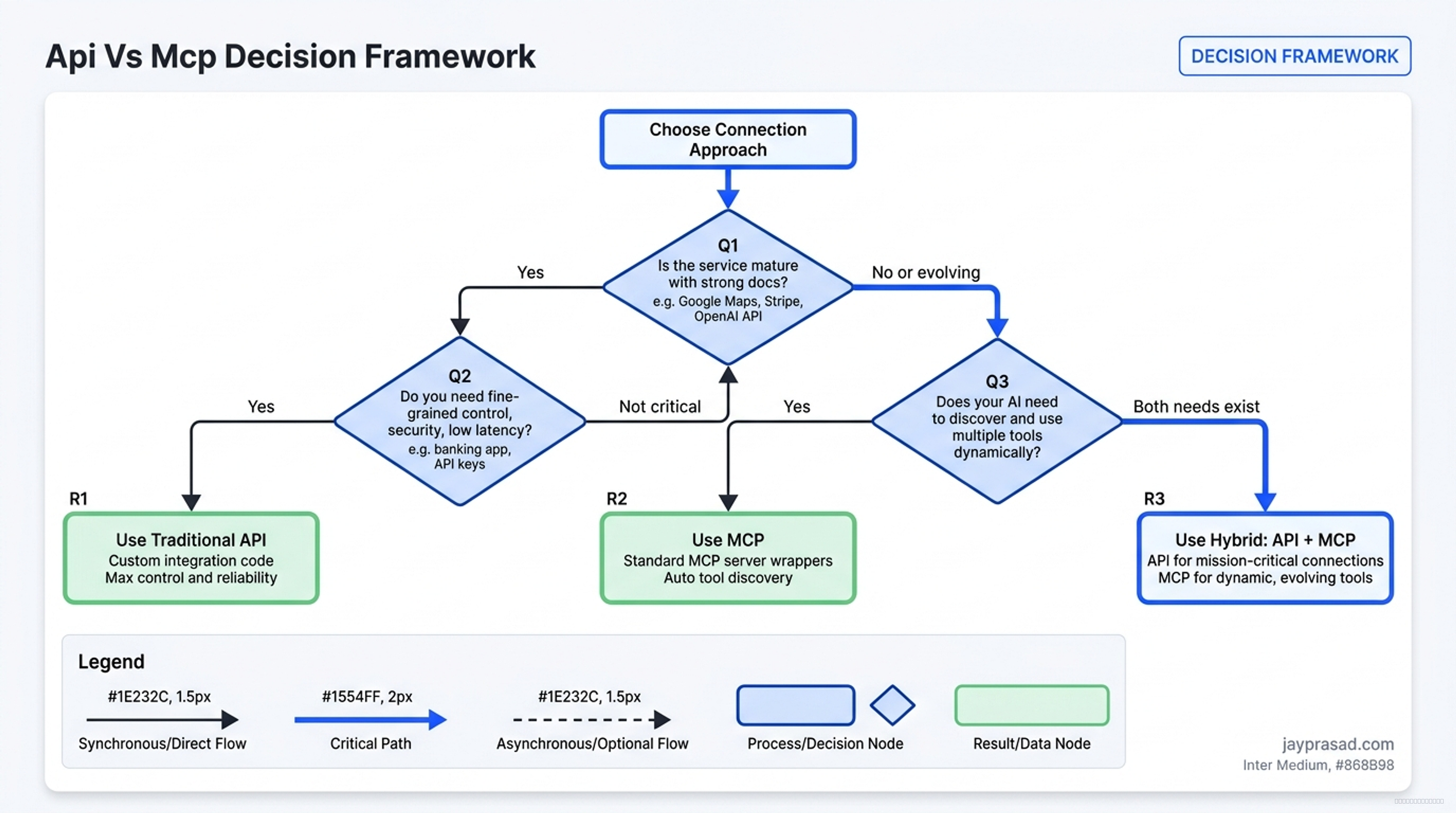
Your decision framework in plain terms? If the service is mature and you need maximum control, go with a traditional API. If you want your AI to flexibly discover and use multiple tools with less custom code, lean toward MCP. And if you're building anything complex, you'll probably end up using both.
Think of it like a toolbox. A hammer and a screwdriver solve different problems — you wouldn't argue about which one is "better." You'd just grab the right one for the task in front of you. Same logic here. MCP's standardization beats custom work when you need speed and adaptability. Custom API integrations beat standardization when you need precision and proven reliability. Does that make the choice feel less overwhelming?
You now have a clear picture of how AI connects to the