Building Gold Tables for Your AI Agent
Listen to this article
What you'll learn
- Understand what makes the Gold layer different from Silver
- Learn how to design tables for specific AI agent use cases
- See how an AI agent reads Gold layer data to answer questions and take actions
- Know what 'business-ready' data actually looks like in practice
We've cleaned and standardized our data in the Silver layer. Time to shape it into something an AI agent can actually work with. Think about it this way — the Silver layer gave us a tidy, well-organized warehouse full of clean ingredients. But an AI agent doesn't want to wander through a warehouse looking for what it needs. It wants a ready-made meal, prepared for a specific purpose. That's exactly what Gold tables are.
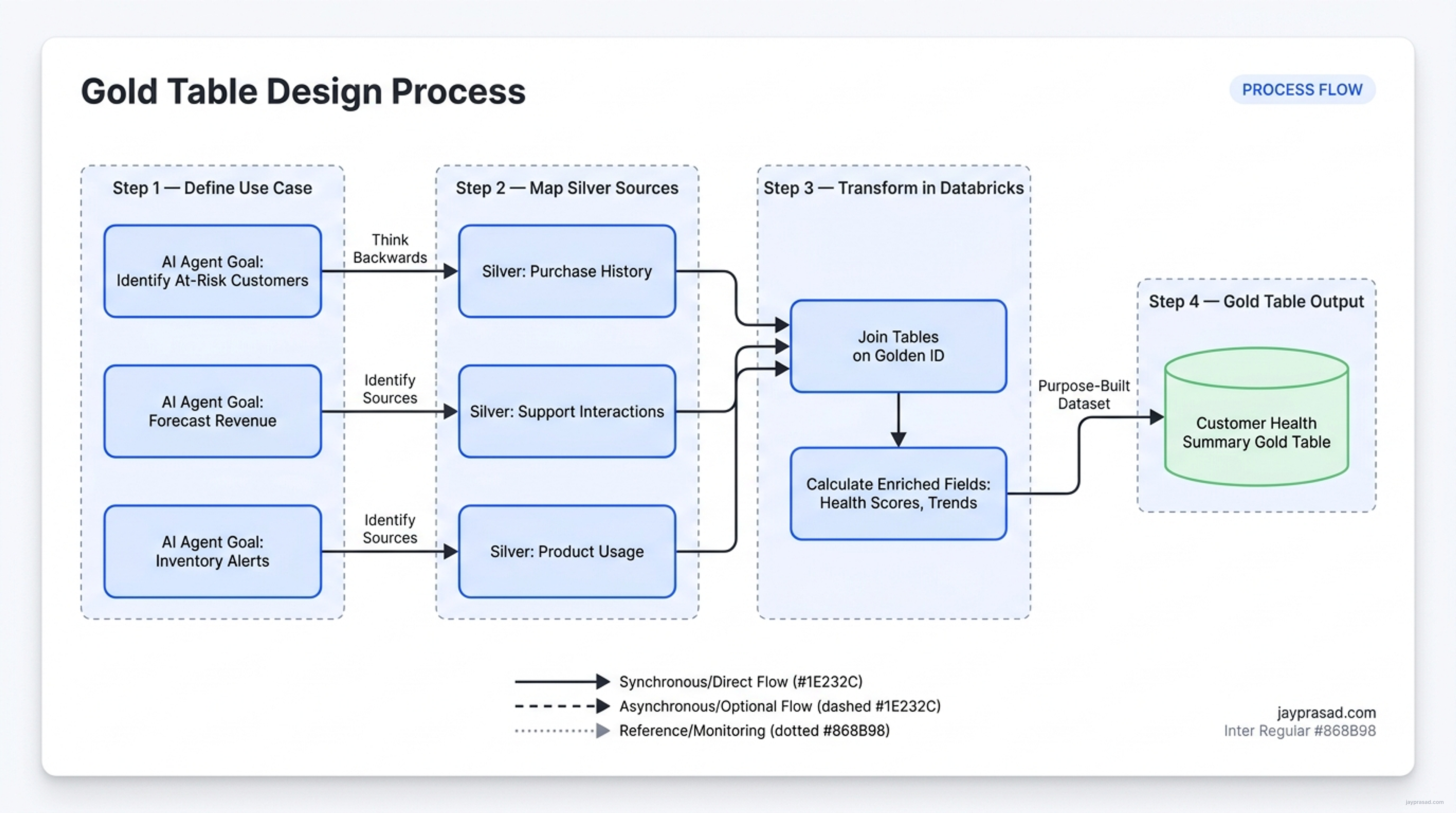
What makes the Gold layer different from Silver? Silver data is clean but general. It's standardized records, deduplicated using that Golden ID we built earlier — the single unique identifier that links every record about the same person or company across all your systems. Silver data is accurate and trustworthy, but it's still organized by where it came from. Sales records sit in one table. Support tickets in another. Product usage somewhere else. The Gold layer takes pieces from those Silver tables and combines them into new, purpose-built tables designed to answer specific business questions. A Gold table might bring together a customer's purchase history, their support interactions, and their product usage into one unified view — something like "customer health summary." That table doesn't exist in any source system. You built it by aggregating, which means combining and summarizing clean data from multiple Silver tables into something new and more useful.
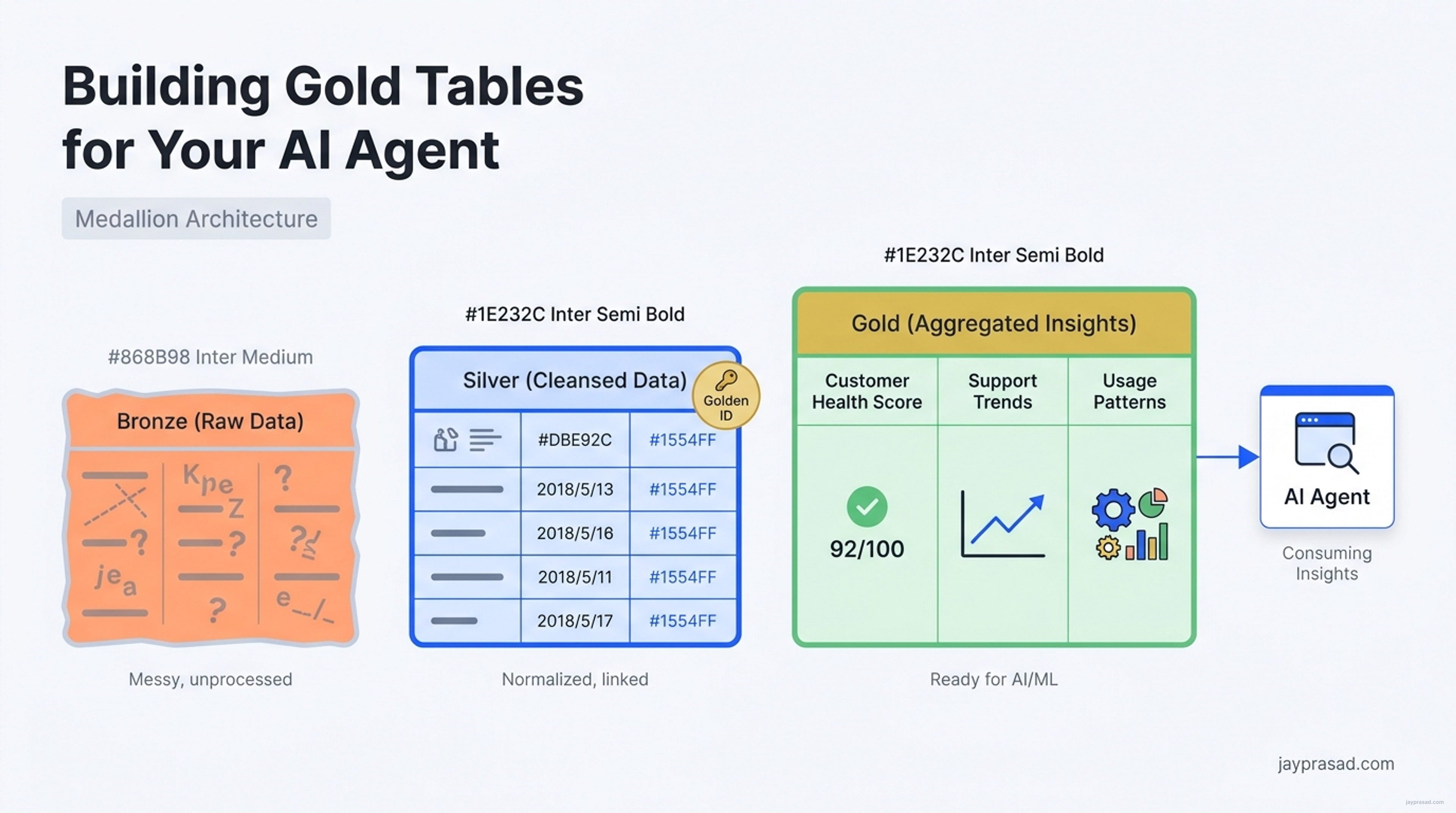
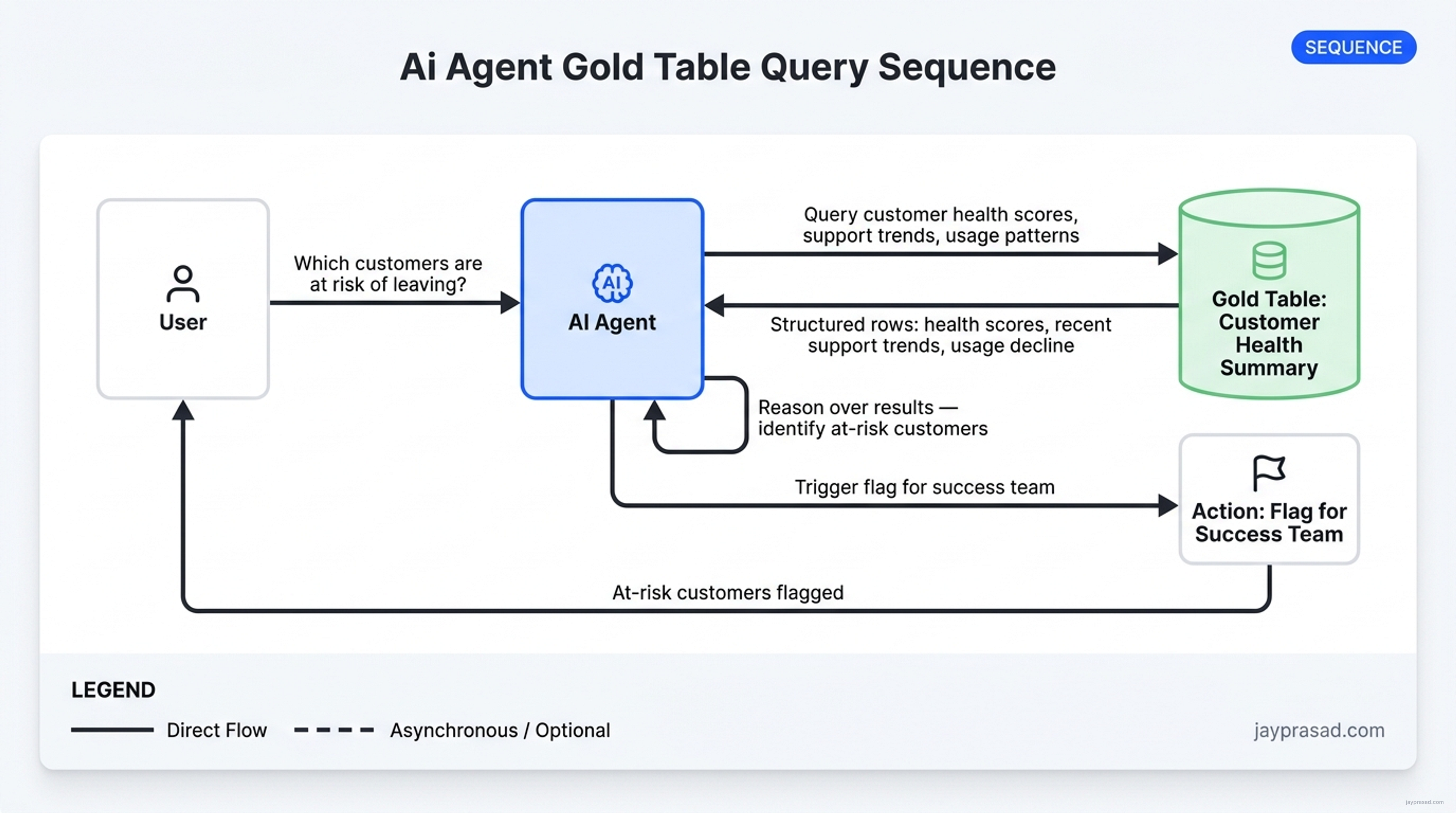
Here's where it gets exciting. An AI agent — software that can reason through information and take actions on your behalf — reads these Gold tables to do its job. Imagine you ask your AI agent, "Which customers are at risk of leaving?" The agent doesn't dig through raw files from your Bronze layer, that messy landing zone where everything first arrived. It doesn't parse through Silver tables trying to join records together on the fly. Instead, it queries a Gold table that already contains the answer — a pre-built dataset with customer health scores, recent support trends, and usage patterns all in one place. The agent reads structured rows and columns, reasons about what it finds, and gives you a clear answer. Maybe it even triggers an action, like flagging those customers for your success team.
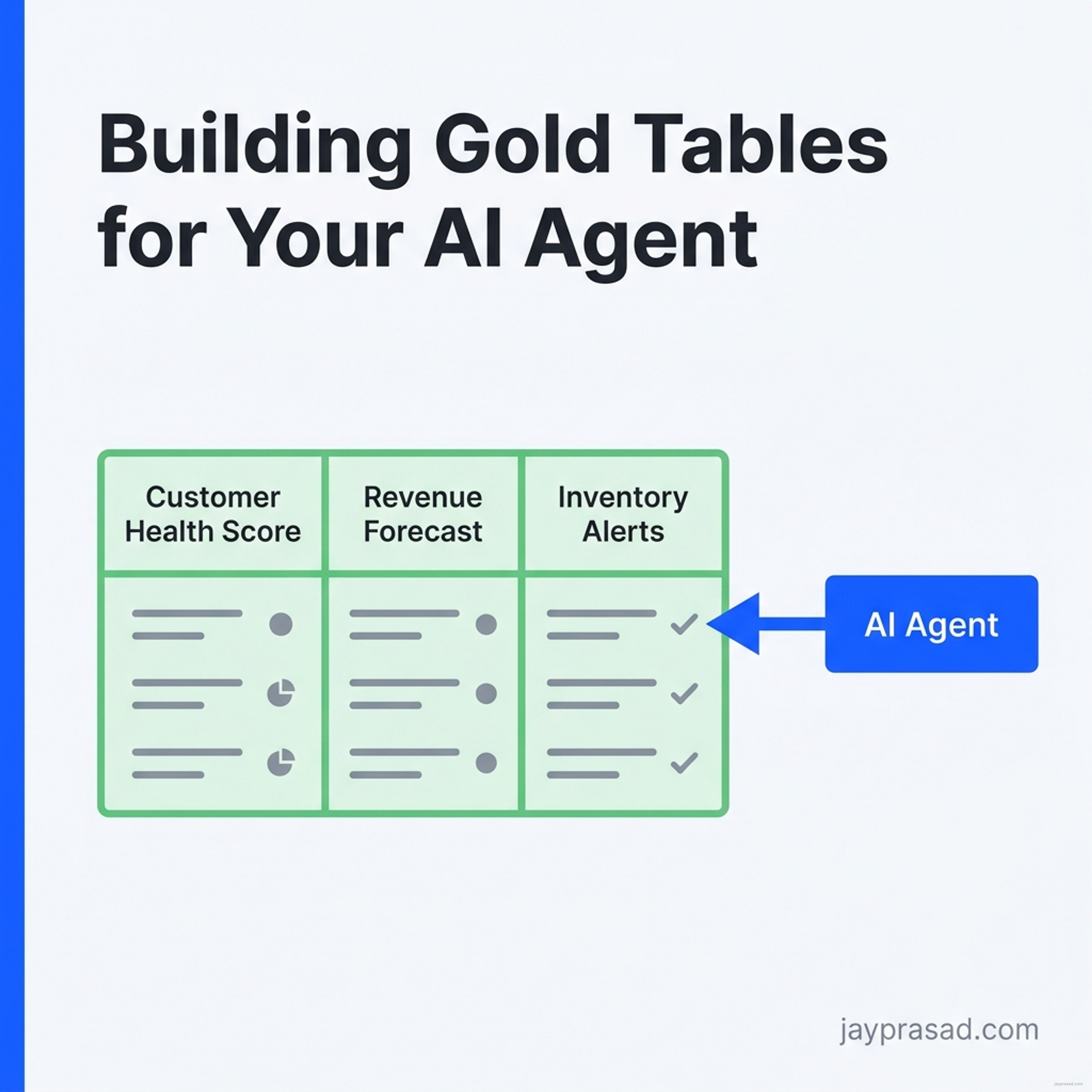
Designing Gold tables means thinking backwards from the use case. You start by asking what does the AI agent need to accomplish, then figure out which Silver tables contain the relevant data, and write transformations in Databricks that join, filter, and summarize those tables into something perfectly shaped for that task. You might build one Gold table for revenue forecasting, another for inventory alerts, another for customer recommendations. Each one is specific. Each one is enriched — meaning it contains calculated fields or combined metrics that don't exist in any single source. And each one traces all the way back through Silver to Bronze, so you always know where every number came from.
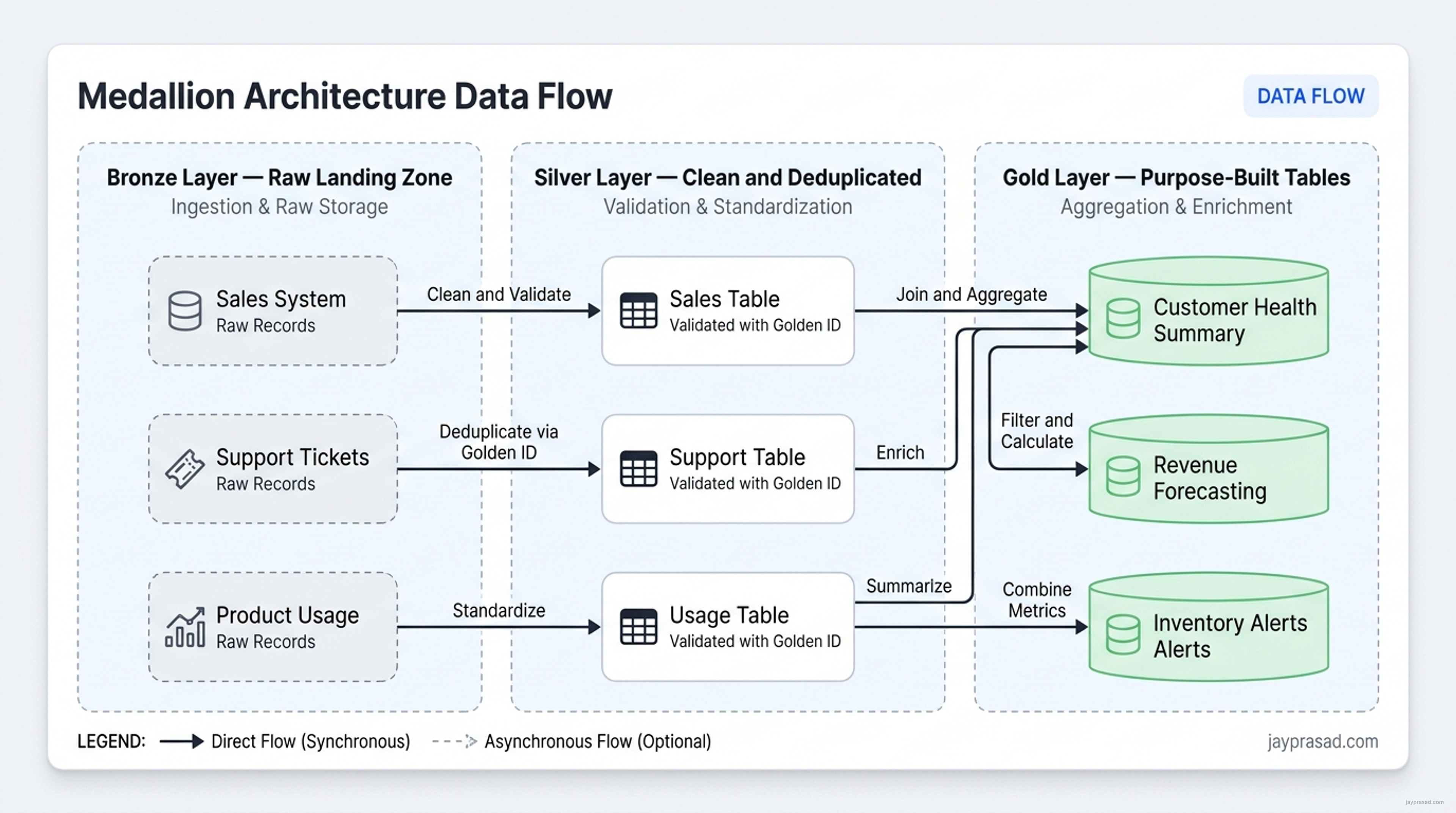
Full picture. Raw data lands in Bronze from all your business systems. It gets cleaned, validated, and deduplicated in Silver using Golden IDs and quality rules. Then it gets shaped into targeted, business-ready Gold tables that an AI agent can query, reason over, and act on. Bronze to Silver to Gold. Messy to clean to purposeful. That's the Medallion Architecture in action inside Databricks, and right now, your AI agent is finally sitting on top of a foundation it can trust.
Your AI agent is reading from clean, trusted Gold tables. But who controls access? How do you know the data is still accurate next week? What happens when someone changes a transformation or a source system sends bad records? That's where governance comes in.
Coming up next
Your AI agent is now reading from clean, trusted Gold tables. But who controls access? How do you know the data is still accurate next week? That's where governance comes in.