Governing Your Data at Every Layer
Listen to this article
What you'll learn
- Understand why governance matters for AI trust and accuracy
- Learn how to set access controls so the right people see the right data
- See how data lineage tracking shows where every number came from
- Know how to set up automated quality checks across Bronze, Silver, and Gold
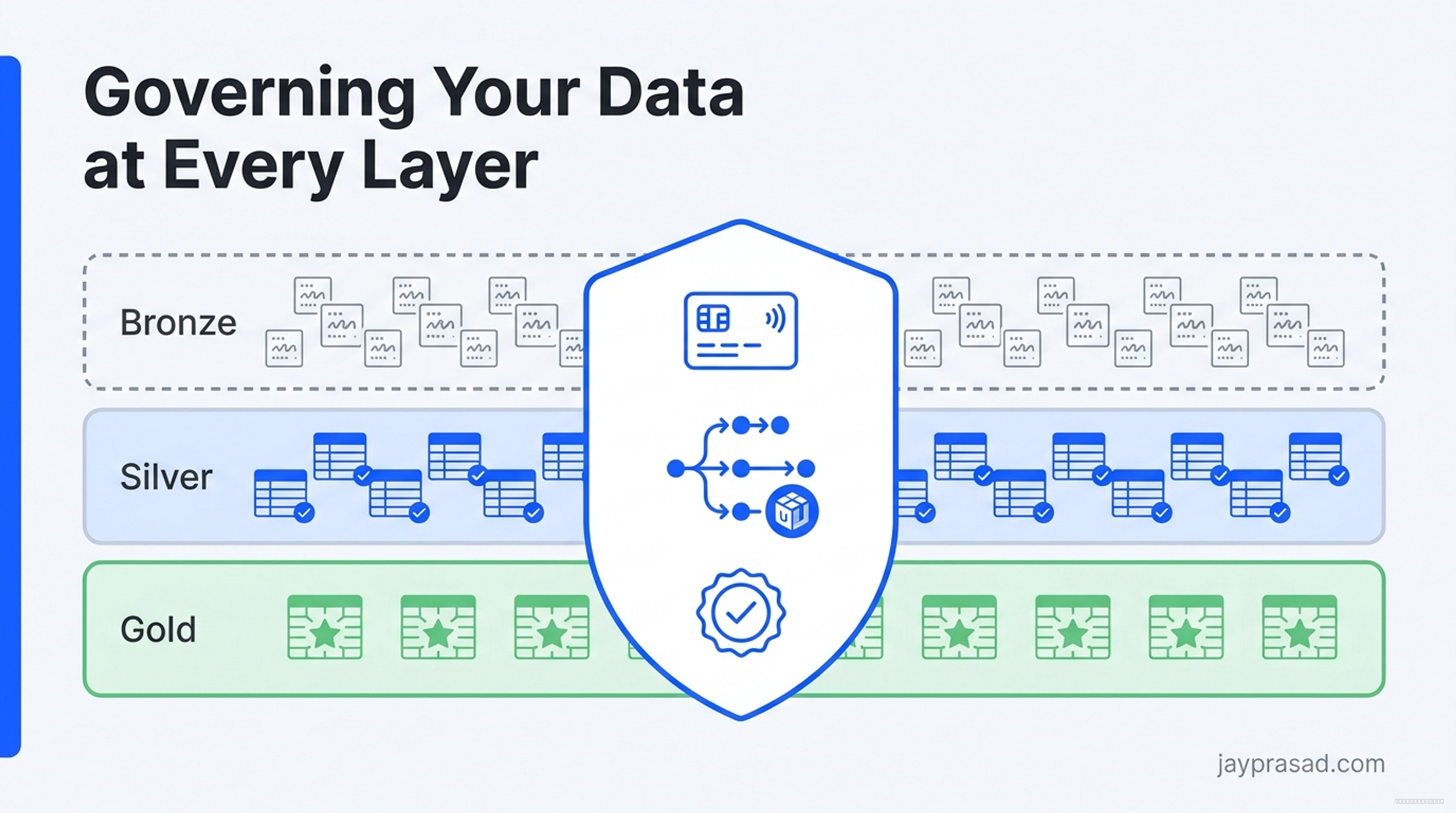
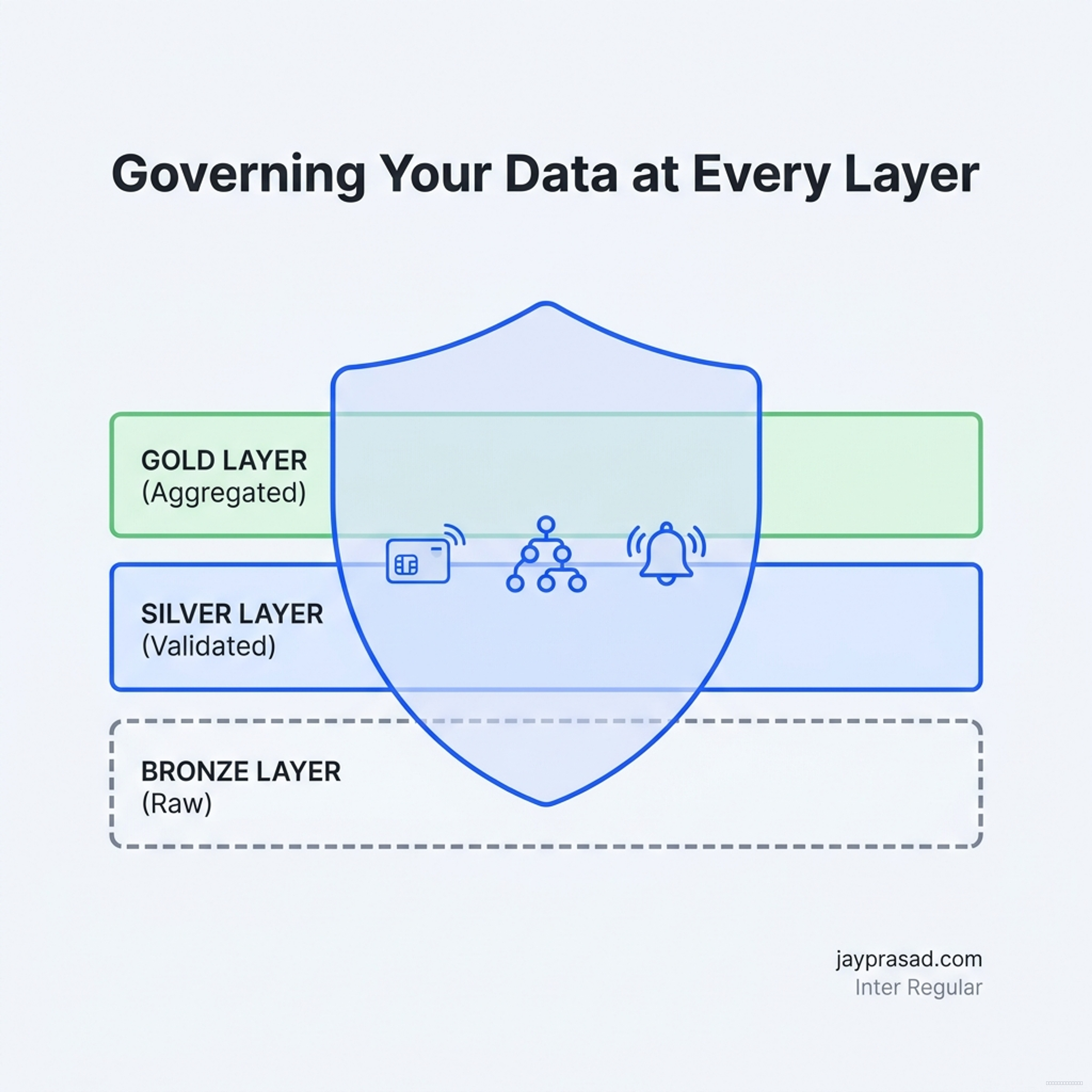
Your AI agent is reading from Gold tables built on clean, stitched data. But how do you make sure this pipeline stays trustworthy over time? Let's add the guardrails. Because a pipeline without rules is like a bank vault with no lock. Anyone can walk in. Anything can go wrong. And nobody knows who touched what. Data governance is the practice of setting rules, permissions, and monitoring across your entire data system so that everything stays accurate, secure, and traceable. It's not a single step you bolt on at the end — it's a discipline that runs through every layer, from Bronze to Silver to Gold.
Start with access controls. Not everyone in your organization should see everything. A marketing intern doesn't need access to raw financial records sitting in your Bronze layer — that raw landing zone where unfiltered data first arrives. A sales manager probably shouldn't be editing the Silver layer, where data gets cleaned and standardized. Access control means deciding who can read, write, or modify data at each layer. The way you do this is through role-based permissions. You create roles like "analyst," "engineer," or "admin," and each role gets a specific set of privileges. An analyst might only read from Gold tables. An engineer might have permission to build and modify Silver transformations. An admin controls it all. Think of it like keycards in an office building — your keycard gets you into the floors you need, not every floor. Databricks lets you set these permissions at the table level, the column level, even the row level. You can hide sensitive fields like Social Security numbers from roles that don't need them, while still letting those roles query everything else.
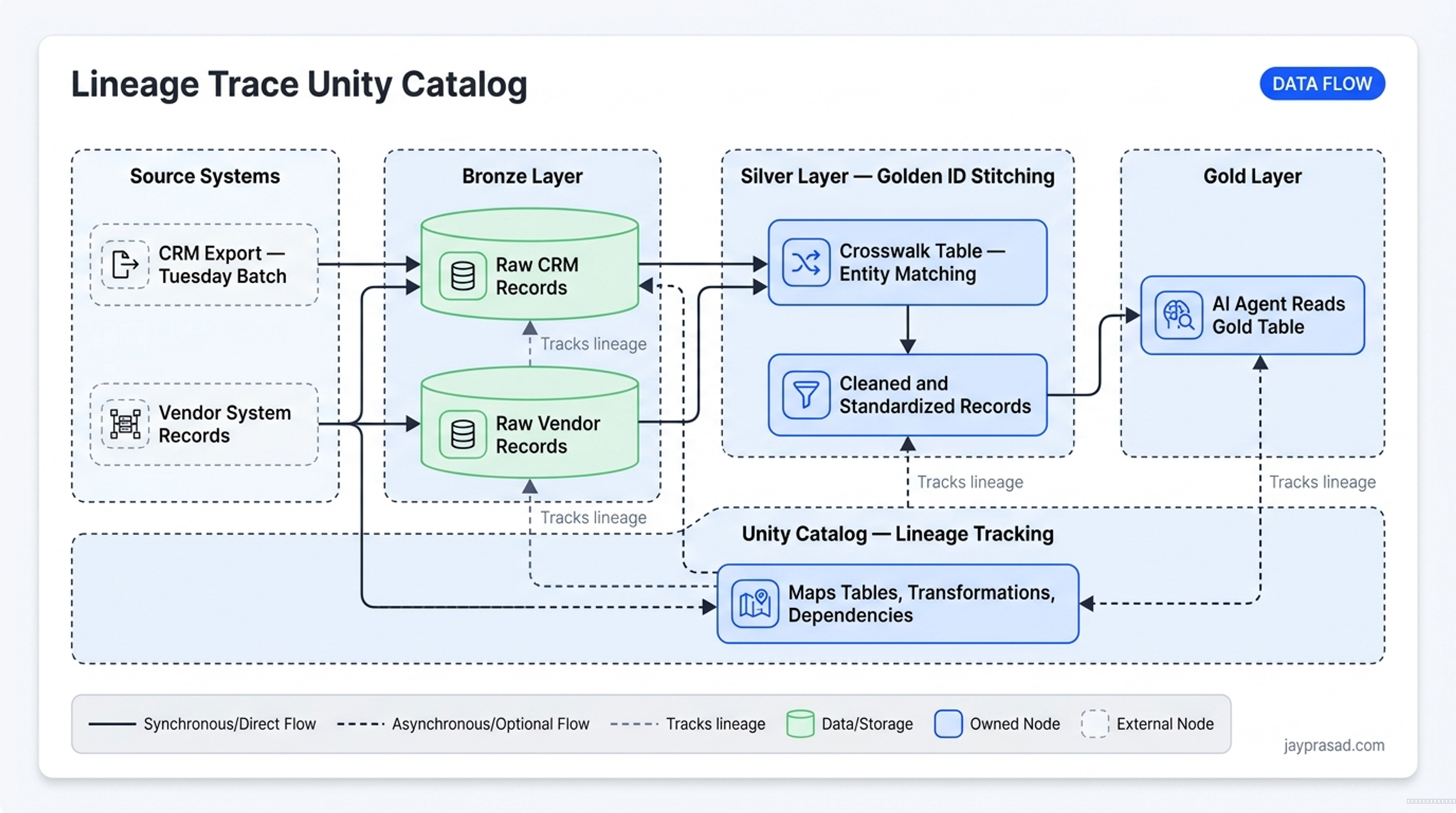
Access controls tell you who can touch the data. But data lineage tells you where the data actually came from. Lineage is like a family tree for every number in your Gold tables. It traces a value all the way back through the Silver cleaning stage, past the Golden ID stitching where records from different systems got linked by a single universal identifier, and down into the raw Bronze records that arrived from your source systems. Why does this matter? Imagine your AI agent gives a customer a wrong answer. Without lineage, you're guessing. With lineage, you click on that number and follow the trail. You see it came from a CRM export on Tuesday, got matched to the wrong entity in the crosswalk table, and carried forward into Gold. You found the bug in minutes instead of days. Databricks tracks this lineage automatically through Unity Catalog, which maps every table, every transformation, and every dependency in your pipeline.
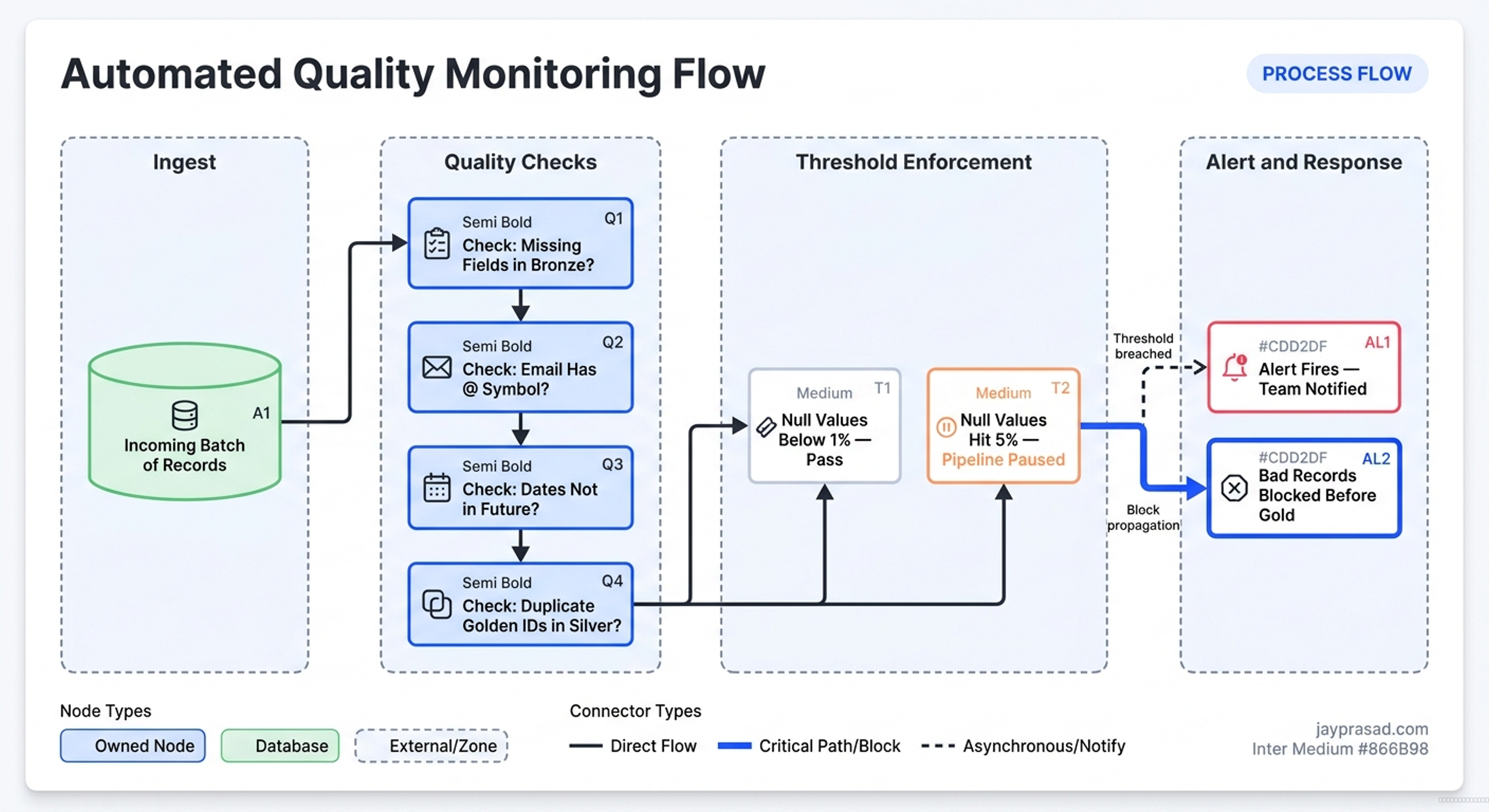
Last piece. Automated quality monitoring. Remember those data quality rules from the Silver layer — things like checking that email addresses have an @ symbol or that dates aren't in the future? You don't want to run those checks once and forget them. Source systems change. Vendors update their formats. Someone renames a column. Automated quality monitoring means setting up checks that run every time new data flows through your pipeline. If a batch of records arrives in Bronze with missing fields, an alert fires. If a Silver transformation produces duplicates that should've been caught by your Golden ID logic, you get notified before those bad records ever reach Gold. You can set thresholds too — maybe you tolerate one percent of records having null values in a non-critical field. But if that number hits five percent, the system pauses the pipeline and sends your team a warning. These aren't manual spot checks. They're automated sentinels watching your data around the clock.
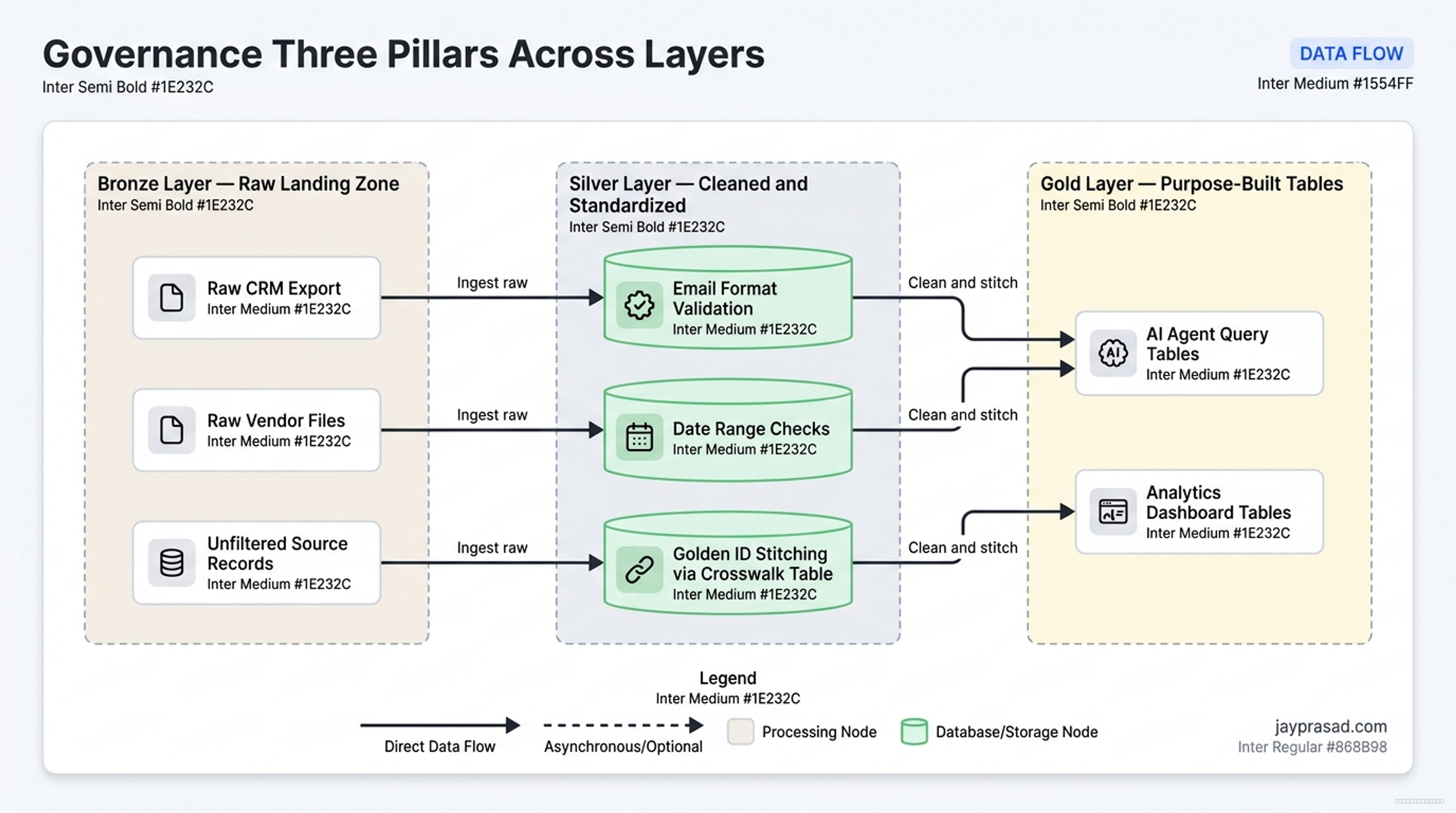
Here's what you've built across this entire series. You started with scattered data trapped in disconnected business tools. You created a Bronze layer to capture everything raw, without losing a single record. You stitched records together with Golden IDs so every person and company had one identity across all systems. You cleaned and standardized that data in Silver. You shaped it into purpose-built Gold tables that your AI agent can actually reason with. And you've wrapped the whole thing in governance — access controls deciding who sees what, lineage tracking proving where every value came from, and automated quality checks making sure nothing degrades silently over time.
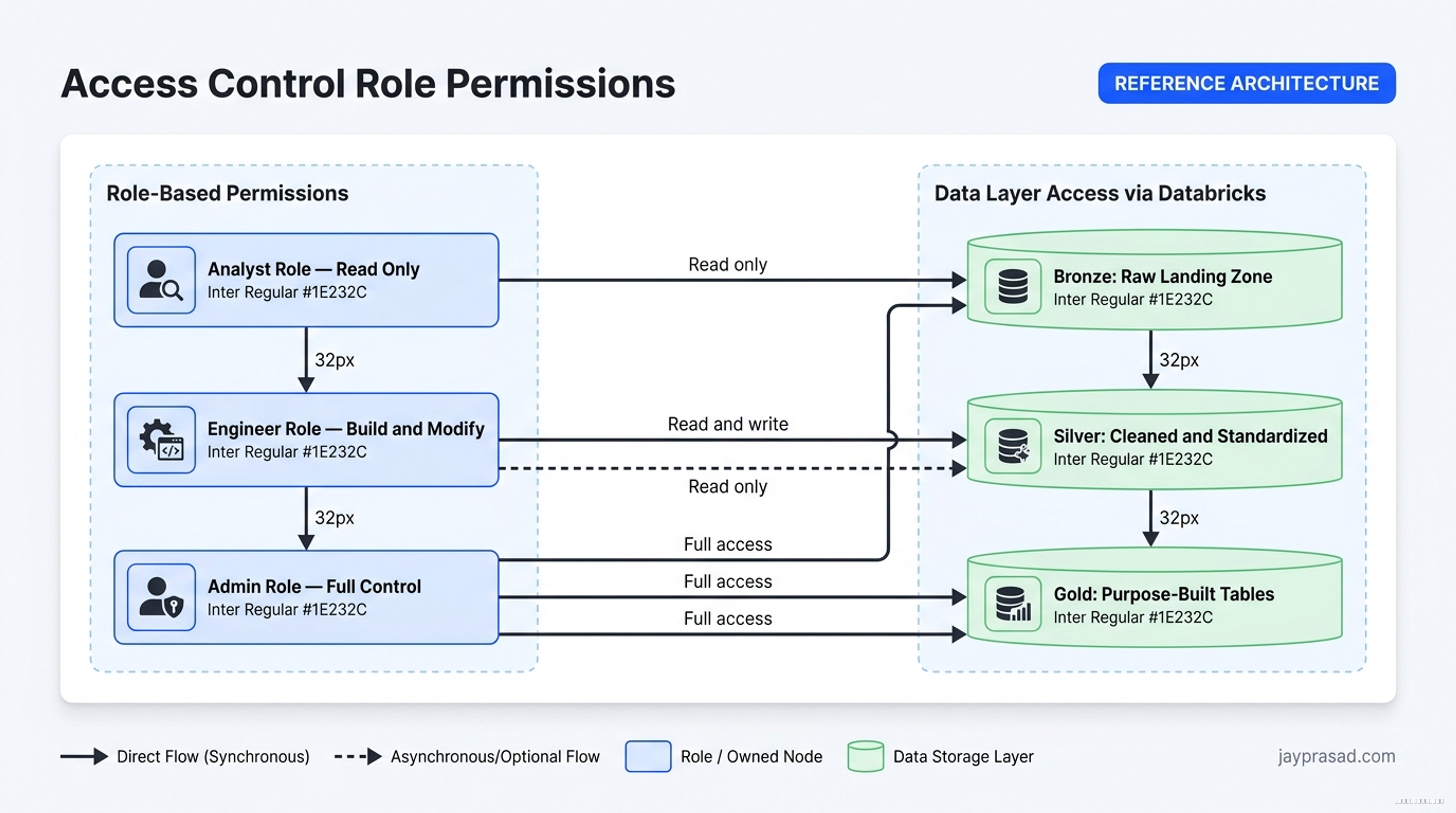
This is your AI data foundation. Not a single tool or a single table, but a complete system designed to keep your data accurate, secure, and ready for whatever you build next. Whether that's a customer-facing AI agent, an internal analytics dashboard, or something nobody's invented yet — this foundation holds. You didn't just learn how a data pipeline works. You learned how to build one that earns trust, and keeps it.