Why Does AI Need to Talk to Other Tools?
Listen to this article
Before we get technical
Have you ever met someone incredibly brilliant who somehow couldn't do the most basic everyday tasks? Maybe they could solve complex math in their head but couldn't cook a meal or schedule their own appointments. That's pretty much the situation with AI right now. These models can write poetry, analyze data, and answer tough questions — but they can't check your calendar, look up today's weather, or pull a customer's order from a database. They're powerful brains stuck in a sealed room with no doors or windows. So how do we give them a way to actually reach the outside world and do useful things? The answer is more interesting than you'd expect.
What you'll learn
- Understand why AI models can't do everything on their own
- See real examples of AI needing outside tools like calendars and databases
- Learn what 'connecting AI to the outside world' actually means in plain terms
Think about the smartest person you've ever met. Someone who can answer almost any question, write beautifully, solve complex math problems, and debate philosophy for hours. Now imagine that person is locked in a windowless room. No phone. No internet. No way to check today's weather, look at your calendar, or send an email. They're brilliant, but completely cut off from the world. That's the situation with most AI today.
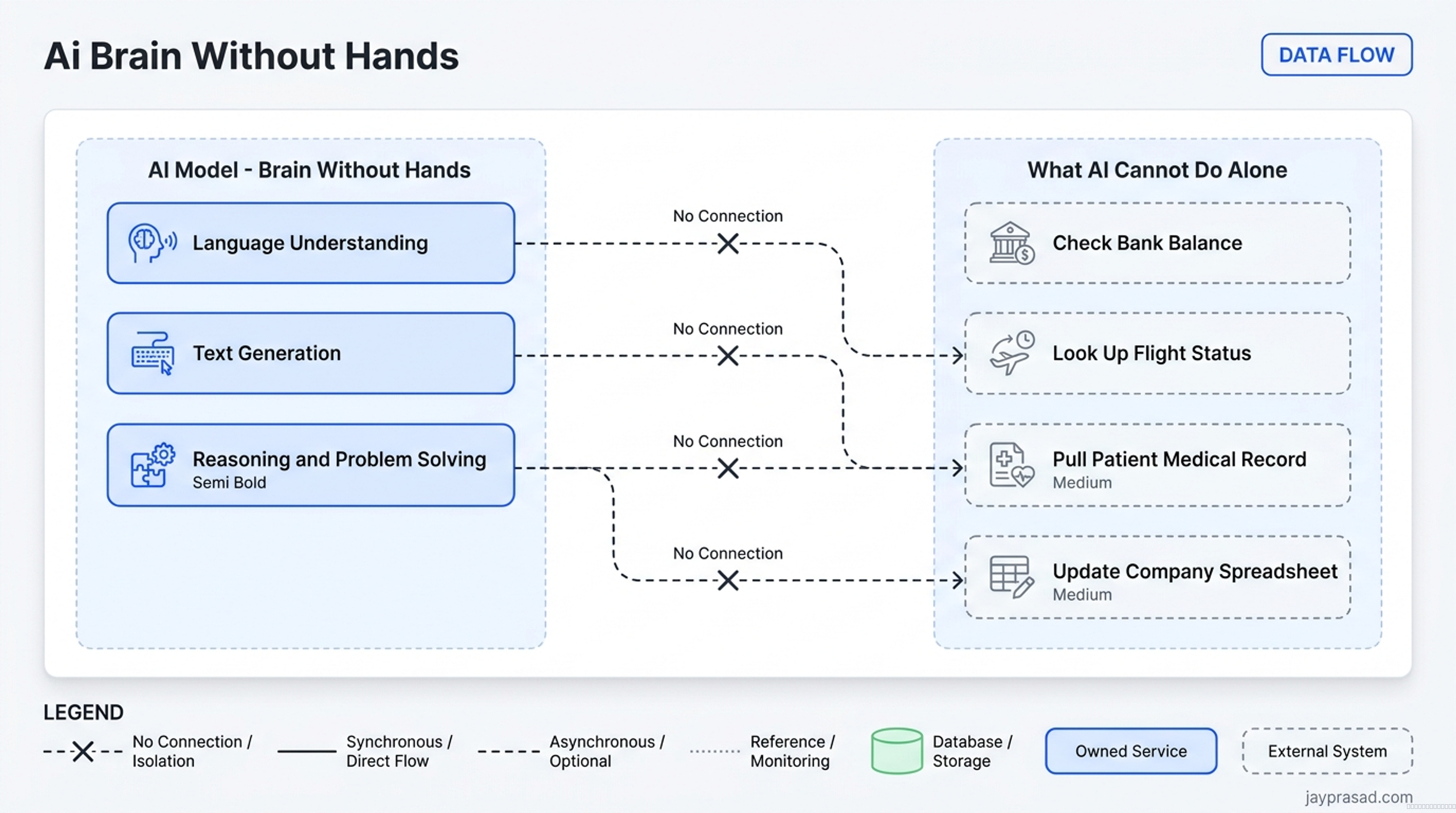
AI models — the software systems behind tools like ChatGPT and similar products — are remarkably good at understanding and generating language. They've been trained on massive amounts of text and can reason through problems in ways that genuinely surprise people. But here's the thing. They don't actually know what's happening right now. They can't check your bank balance. They can't look up whether your flight got delayed. They can't pull up a patient's medical record or update a row in your company's spreadsheet. An AI model is a brain without hands. It can think, but it can't reach out and touch anything.
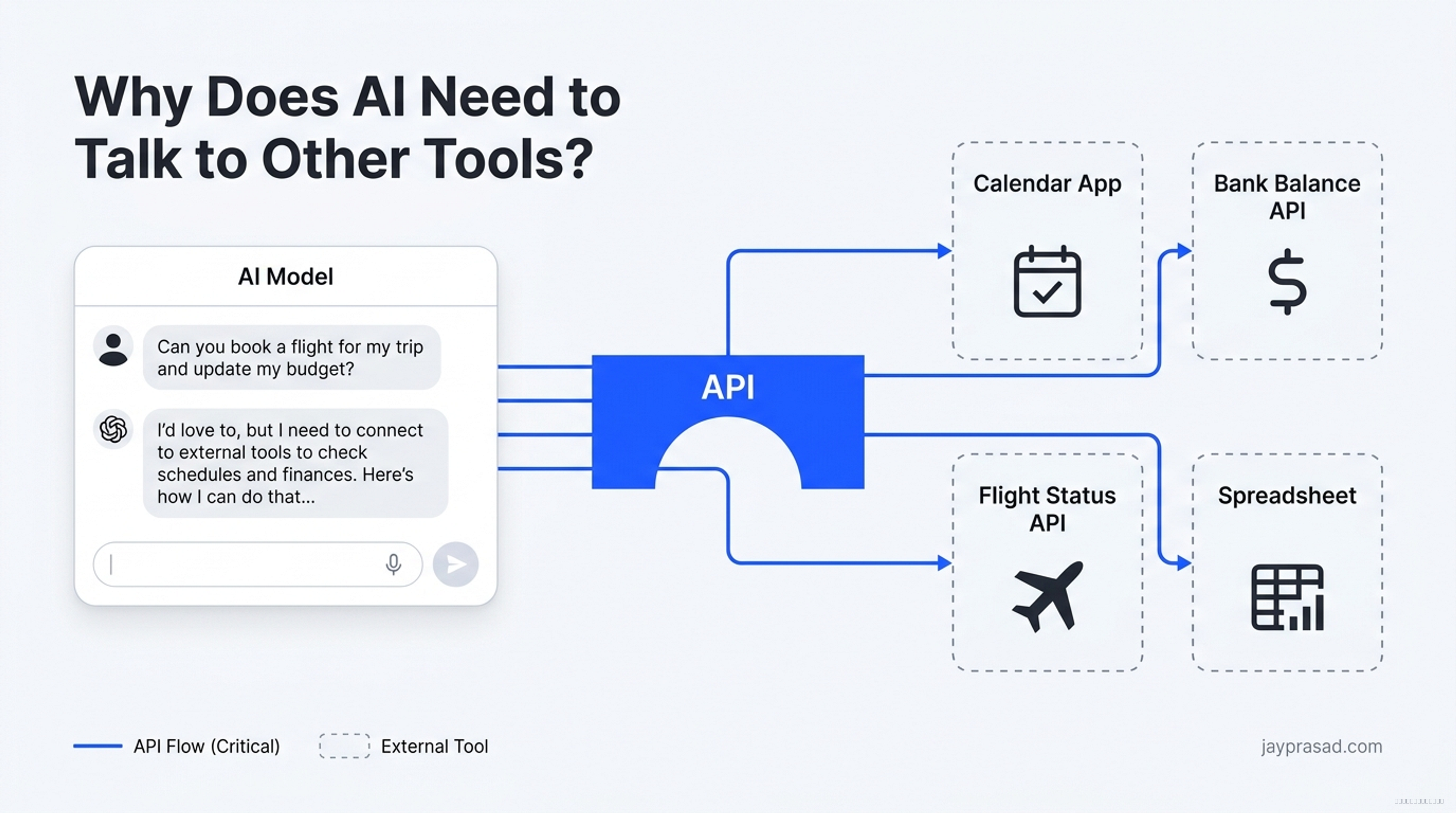
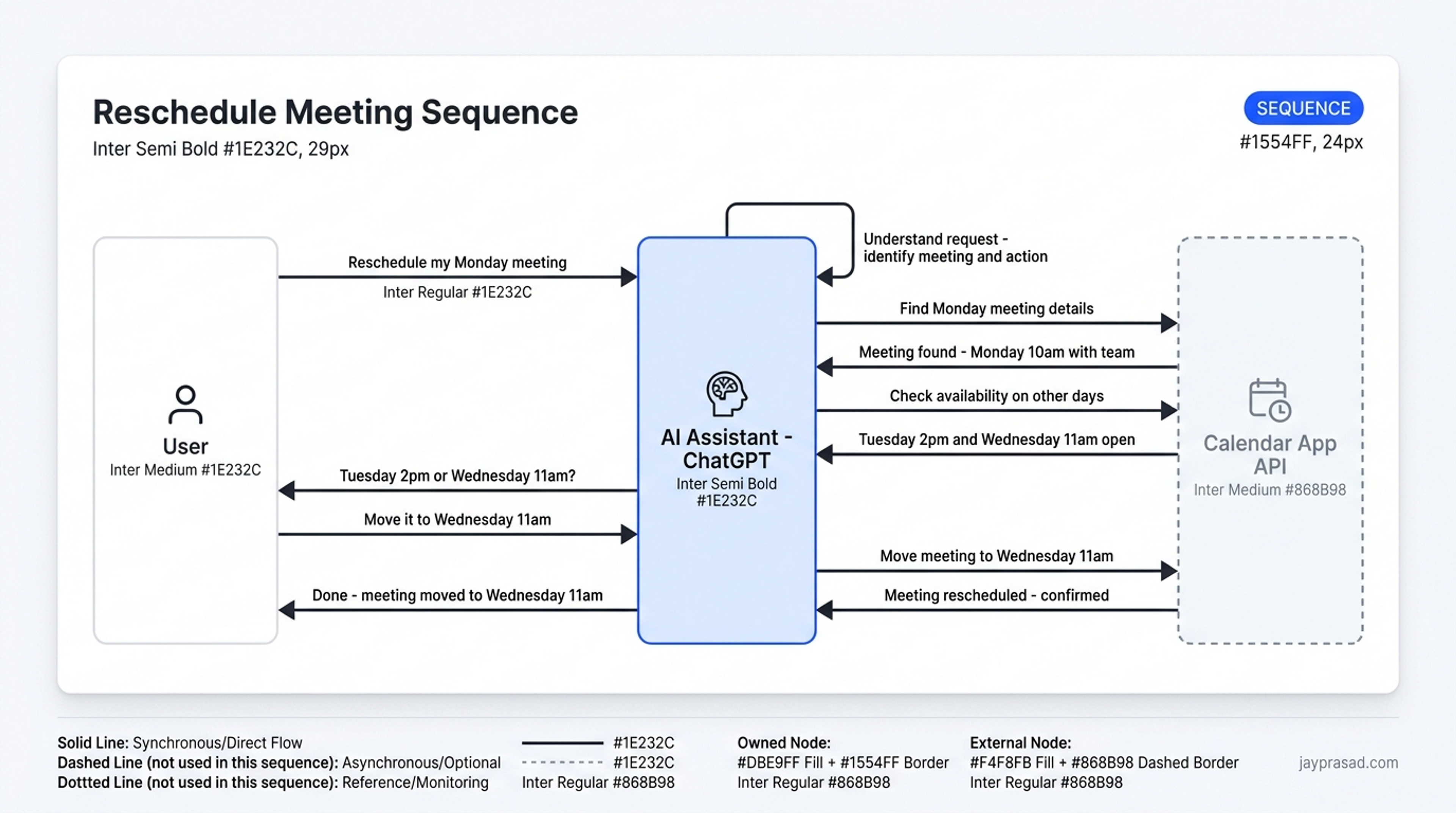
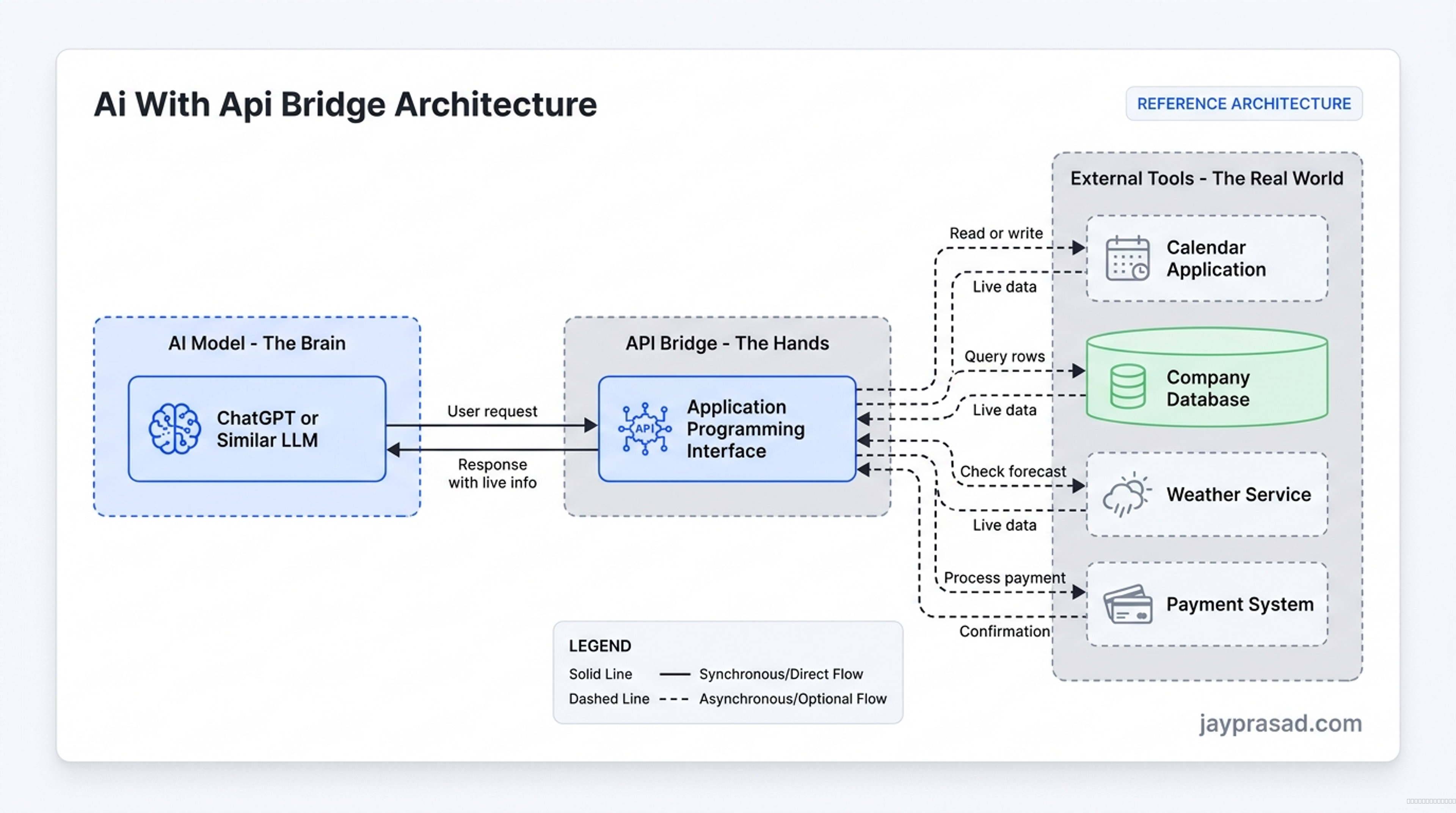
Why does that matter? Because the most useful things we want AI to do require real-world information and real-world actions. Imagine asking your AI assistant to reschedule your Monday meeting. Sounds simple, right? But to actually do that, the AI needs to connect to your calendar application, find the meeting, check your availability on other days, and then move it. Each of those steps requires talking to an external tool — software that lives outside the AI itself. A calendar app, a database, a weather service, a payment system. The AI is smart enough to understand your request. It just has no built-in way to reach those tools.
The real problem isn't intelligence. It's connection. How does a brain without hands actually get hands? How does AI reach the outside world? This is what people mean when they talk about connecting AI to external tools. They mean building a bridge between the AI's ability to understand what you want and the software that can actually go do it. Without that bridge, your AI is stuck answering questions from memory — which might be months or even years out of date. With that bridge, it can look things up, take actions, and work with live information. The difference is enormous.
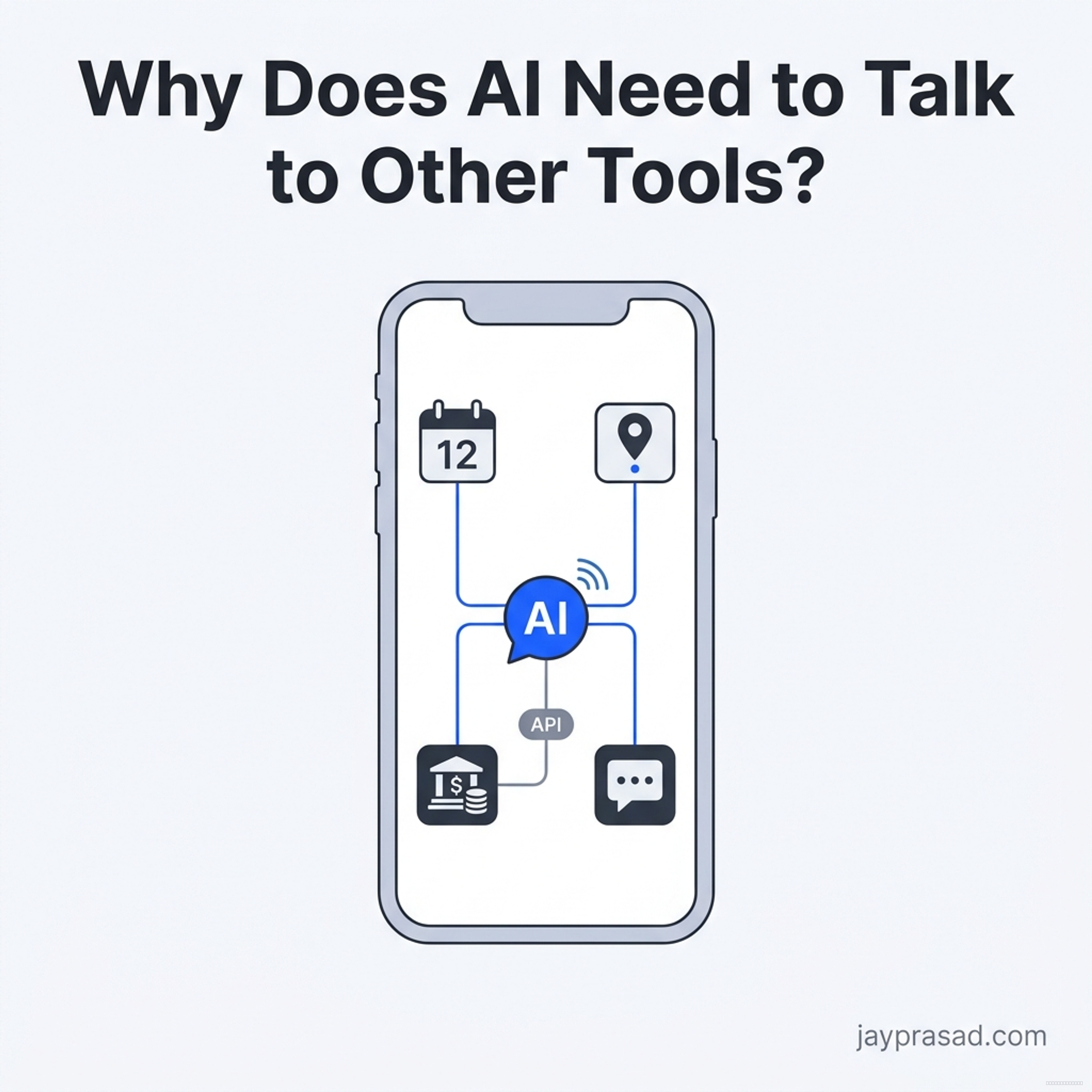
Here's an analogy. You know how your phone is useful not because of one single feature, but because it connects to thousands of apps? Maps, banking, messaging, music. The phone itself is just a screen and a processor. The magic happens because it connects to outside services. AI works the same way. The model alone is impressive but limited. The model plus connections to real tools? That's where things get interesting — and honestly, that's the part most people underestimate.
AI needs to talk to other tools. That much is clear. But how has software been doing this for years? Long before anyone was talking about AI assistants, programs were already sending information back and forth to each other across the internet. There's a tried-and-true method called an API — Application Programming Interface — and it's the foundation of all of this. Understanding how APIs work is the first step to understanding the bigger picture, and that's exactly where we're headed next.
Coming up next
So AI needs to talk to other tools. But how has software been doing this for years? There's a tried-and-true method called an API, and it's the foundation of everything.