What Is Databricks and Why Does It Matter?
Listen to this article
What you'll learn
- Understand what Databricks is and what problem it solves
- Learn why AI agents need clean, organized data to work well
- Get a first look at the Medallion Architecture and its three layers
- See how multiple business systems create a messy data problem
Think about the last time you asked a smart assistant a question and got a completely wrong answer. Maybe it mixed up your sales numbers, confused two customers, or just made something up entirely. That failure probably wasn't an intelligence problem. It was a data problem. The AI didn't have access to clean, trustworthy information. That's exactly what we're solving in this series — building a proper data foundation, the kind that makes AI agents actually useful and reliable.
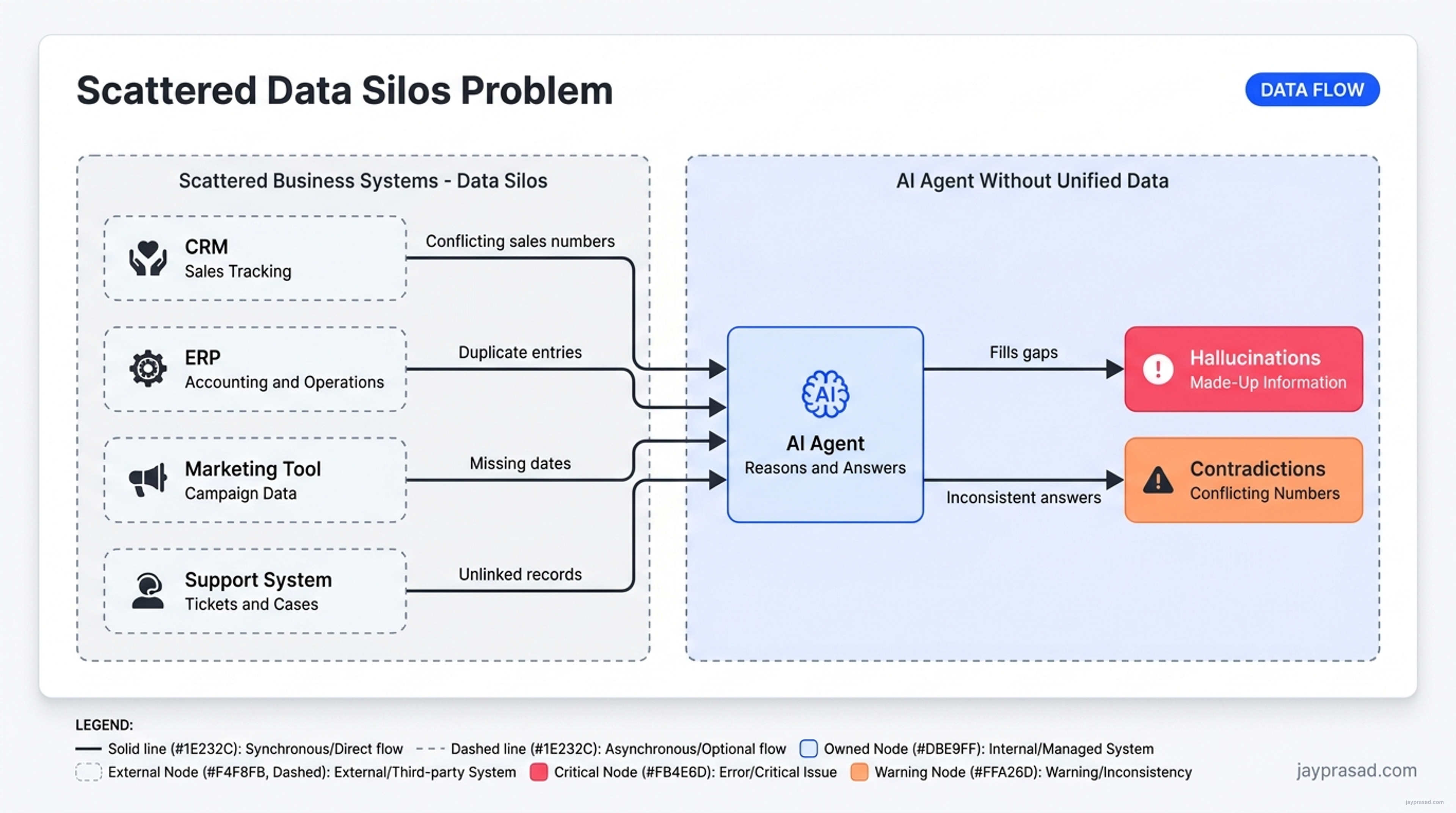
Where does Databricks fit into all of this? Databricks is what's called a unified data platform, which is really just a fancy way of saying it's one place where you can store, clean, organize, and analyze all of your data. Think of it like a massive, well-organized warehouse for information. Before platforms like this existed, companies had their data scattered everywhere. Sales numbers lived in a CRM — that stands for Customer Relationship Management, basically your sales tracking software. Financial records sat in an ERP, short for Enterprise Resource Planning, which handles accounting and operations. Marketing data lived in yet another tool. Support tickets in another. Every team had its own silo, its own little island of information that didn't talk to the others.
Here's why that matters for AI. An AI agent is a piece of software that can reason through tasks, answer questions, and take actions on your behalf. But it can only be as good as the data it can access. Imagine asking a new employee to write a quarterly business report, but you hand them three different spreadsheets with conflicting numbers, duplicate entries, and missing dates. They'd be lost, right? That's exactly what happens when an AI agent tries to work with messy, scattered data. It hallucinates — meaning it fills in gaps with made-up information. It contradicts itself. It gives you answers that sound confident but are flat-out wrong.
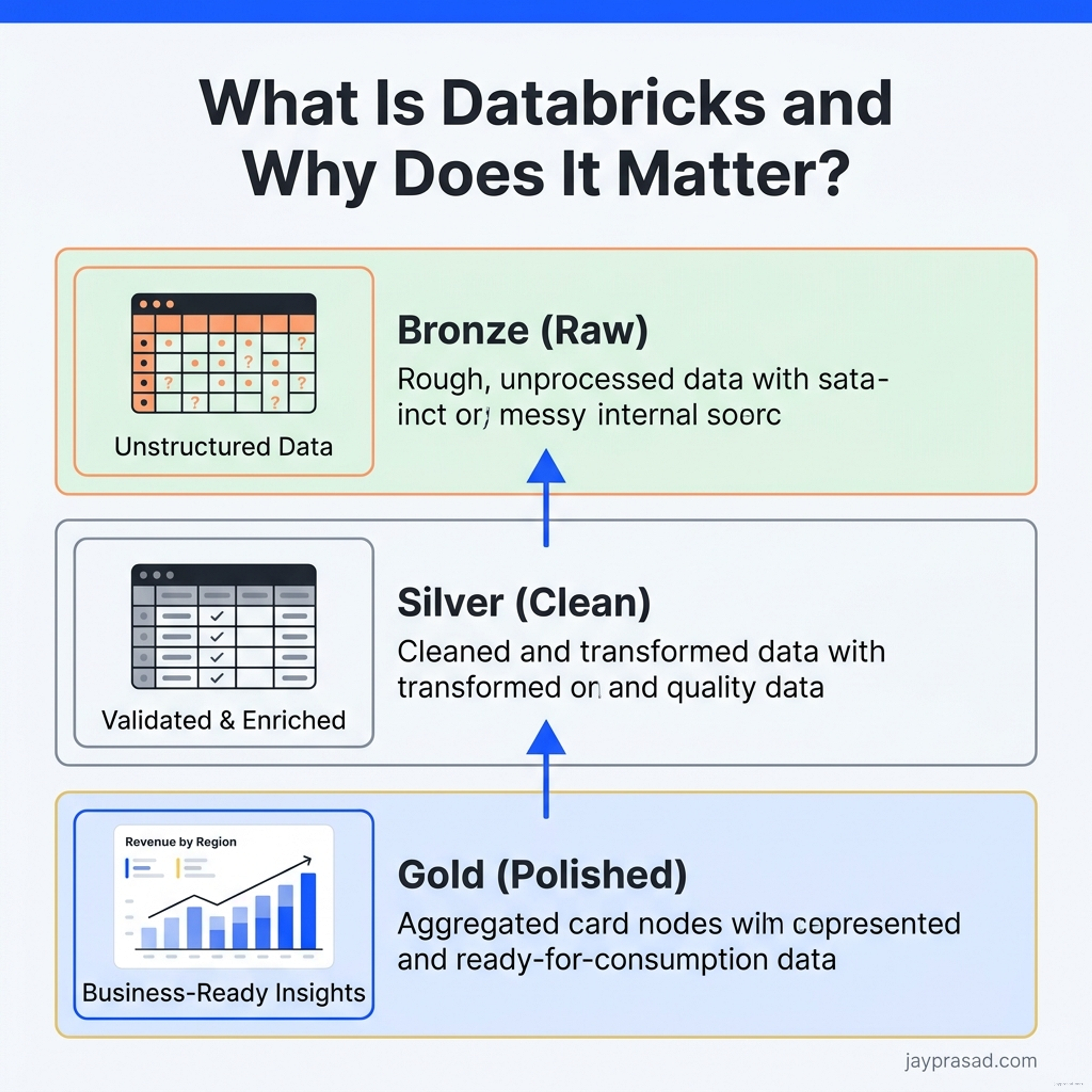
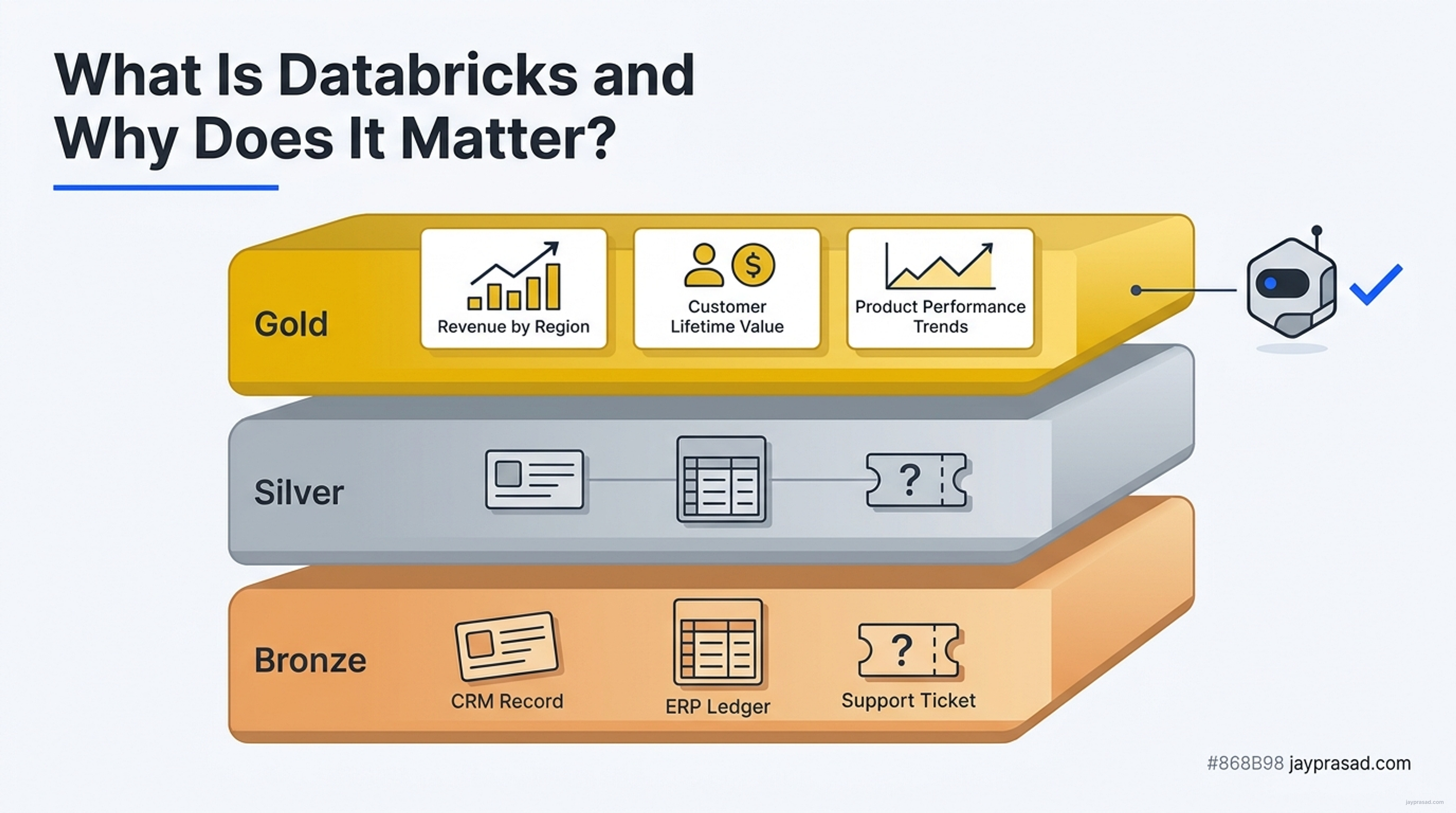
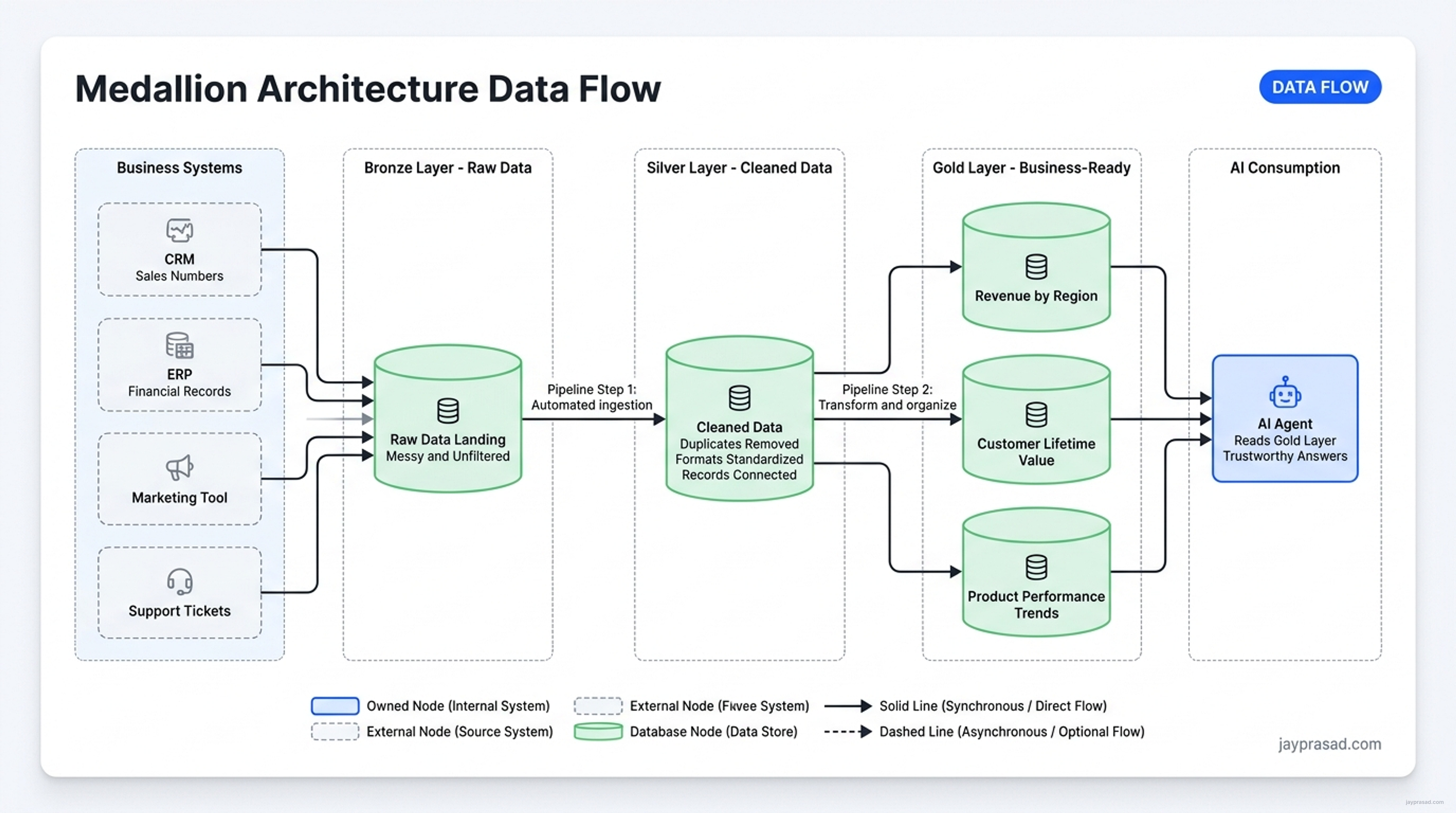
Databricks solves this with something called the Medallion Architecture. Picture three layers stacked on top of each other, like refining raw ingredients into a finished meal. Bronze is where raw data lands exactly as it arrives from your business systems — messy and unfiltered. Silver is where that data gets cleaned up: duplicates removed, formats standardized, records from different systems connected to each other. Gold is polished, business-ready data organized around specific questions you want answered. Revenue by region. Customer lifetime value. Product performance trends. Your AI agent reads from this Gold layer, which is why it can give you answers you actually trust.
The beauty here is you never lose the original data. Bronze keeps everything raw, so you can always go back and reprocess it if your needs change. Silver gives you a reliable, cleaned-up version. Gold gives you purpose-built datasets ready for analysis and AI. Each layer builds on the one below it, creating a pipeline — just a series of automated steps that move and transform data from one stage to the next.
You know the plan. But how does raw data actually get from your business systems into Databricks? That's where the Bronze layer comes in.
Coming up next
Now you know the plan. But how does raw data actually get from your business systems into Databricks? That's where the Bronze layer comes in.